• Skip to main content
  • Skip to footer
  • Home
  • Directory
  • Add Listing
  • Submit News
  • Contact
  • Gqeberha Socials
MyPE Business

MyPE Business

All About Business in Nelson Mandela Bay

You are here: Home / Archives for Guest

Guest

Bay Mayor welcomes Volkwagen’s statement of intent

8 February 2024 by Guest Leave a Comment

Nelson Mandela Bay Municipality Executive Mayor Gary van Niekerk welcomed the strong statement of intent by Volkswagen Group Africa that its African headquarters will remain in Kariega.

“Kariega (formerly Uitenhage) has been synonymous with the Volkswagen South Africa brand since its establishment in 1946 and its facilities still represents the largest investment in South Africa by a German automotive company.

“We are immensely proud of this legacy. In addition, the automotive giant’s intent to increase its African footprint from Kariega is excellent news for us.

“The announcement by the Volkswagen Group Africa Managing Director Martina Biene this week, augers well for the Nelson Mandela Bay Municipality’s plans to increase its market share in the automotive sector.

“As much as we are working on strategies to diversify our economy by developing other sectors, we need to cement our position as the “Detroit of South Africa” and further improve our output.

“The news that Volkswagen Group Africa will be producing its first fully electric vehicle, the ID.4 this year as well as the new T-cross, Tiguan and Touareg models, augurs well for our economy.

“We are confident that the electrical vehicle will do well as market trends indicate that the demand for environmentally friendly transportation is growing.

“We would like to repay this vote of confidence in our city by improving our infrastructure and building a region where businesses can thrive and do business seamlessly.

“I would like to wish them well with their plans to become a carbon neutral company by 2030 and look forward to continue our good working relations with the Volkswagen Africa Group,” Mayor Van Niekerk said.

Editor: Come on Gary Old Boy – lets rather aim for the ‘Detroit of Africa’ and, just to confirm we are talking about the Detroit of old and NOT present day Detroit!

Coega Leads the Country’s SEZs and Industrial Development Agencies on PR Prowess

7 February 2024 by Guest Leave a Comment

The Coega Development Corporation’s (Coega) Public Relations and Communications prowess plays an important role in delivering impactful content and messaging to stakeholders and clients, thus demonstrating its expertise in this field, as a leading organisation in Africa on special economic zone and industrial development. Since 1999, Coega has made significant strides in leveraging various traditional and digital media to promote and position its key projects, innovative initiatives, and achievements as a public entity, to ensure sustainable organisational growth, writes Coega’s Communications Young Professional, mentored by Dr. Ayanda Vilakazi, Coega’s Head of Marketing, Brand and Communications.

Public relations (PR) industry trends highlight the advantages of applying a multi- faceted approach to communications. This includes developing strategic and compelling digital content, storytelling, copywriting for search engine optimisation (SEO), integrated marketing communications and events management, marketing sponsorships aligned to environmental, social and governance pillars, consistent stakeholder engagement and partnership building, and the adoption of new technologies, such as artificial intelligence (AI).

From January to December 2023, Coega generated an impressive publicity value exceeding R130m, and significant circulation across various platforms. Fundamentally, among other metrics the organisation utilises, measuring the value elements of Coega’s publicity coverage assists in assessing the impact of public relations on brand recognition, public perception, messaging and positioning, and stakeholder support, buy-in and advocacy. Based on independent and credible PR agency monitoring, Coega’s Share of Voice (SoV) has consistently exceeded 55% for the past 10 years; the second closest SEZ is below 20% and the third, below 15%. Other SEZs and industrial zones in South Africa have not been able to break the 10% SoV mark. Therefore, Coega is one of the most recognisable SEZ brands in global markets. When asked the basis for approaching Coega to become strategic partners for the promotion of business expansion and development between China and Africa, the China Construction Bank in South Africa attributed the decision to Coega’s good brand image and reputation in global markets. Moreover, because the collaboration could generate significant socio-economic impact through job creation, technology transfer, and skills development.

Swiftly approaching its 25th anniversary, Coega is mandated to operate and develop Africa’s leading 9003ha Special Economic Zone (SEZ), a preferred investment destination and gateway to world markets. Its purpose focuses on enabling socio-economic development through investment attraction, infrastructure development, and value-added business services. However, often swimming against the tide, operating in a challenging macro-economic environment, worsened by geopolitical tensions, global price increases, inflationary pressures, and slowdown in inward FDI, Coega’s unique value proposition has enabled it to remain competitive as an attractive investment destination in Africa. Recent investments include Stellantis Middle East and Africa with an announcement of R3bn investment to develop a greenfield manufacturing facility in Coega, along with the Industrial Development Corporation (IDC) and the Department of Trade, Industry and Competition (dtic), widely reported in the media.

To strengthen brand visibility amongst a diverse public audience, Coega’s activities in the media have traversed both traditional and digital media, with active project profiling on popular social media platforms like Facebook, LinkedIn, X, Instagram, and YouTube, while maintaining a presence in mainstream print and broadcast media. This multi-faceted approach has ensured that Coega’s messaging reaches as wide an audience as possible, regionally, and internationally. Analytical data places Coega first amongst competing development agencies in South Africa, in terms of SEO, social media following, and engagement. In 2023, Coega’s impressions increased. The content that received the most attention aligned with its purpose and positioning in driving socio-economic development and as a beacon of hope for communities. Additionally, Coega’s partnerships with public and private organisations were actively leveraged to boost circulation and reach.

The year 2023 saw the launch of several high-profile infrastructure and investment projects. Coega’s informative insights and communication efforts played a crucial role in promoting these projects, whilst demonstrating its competence in infrastructure development and maintenance in South Africa. Through targeted tactical media campaigns and messaging, Coega effectively communicated the benefits of these projects, including job creation, training, and localised economic growth.

Based on its mandate, Coega’s appointment as a trusted Implementing Agent (IA) of choice for various infrastructure projects includes, amongst others, the R4,2bn Tshwane Automotive Special Economic Zone, adjacent to Mamelodi Township; the R1bn Cecilia Makiwane Hospital, in Mdantsane; the R600m Anton Lembede Mathematics, Science and Technology Academy in La Mercy, north of Durban; and several Transnet National Ports Authority projects. Coega is ISO certified and has won no less than 20 local and international awards of excellence. In addition, Coega is recognised by clients in government and the private sector, built environment industry experts, and by the communities it serves, as a leader in industrial development while ensuring accountability, ethical conduct, and integrity in line with its organisational values.

In conclusion, looking ahead, Coega is poised to continue promoting its brand image, products and services, developments and milestones using effective channels, media, and other key touchpoints. As the organisation expands its reach and impact to the rest of the country and African continent, it will be essential to maintain transparent, inclusive, and engaging communication. Therefore, by effectively leveraging media platforms and forging strong communication partnerships with stakeholders, locally and on the continent, Coega can continue to drive positive change and development, with a focus on inclusive economic growth, job creation, and community development particularly for youth, women, and persons living with disabilities.

PE Ratio and Dividends

7 February 2024 by Guest Leave a Comment

While a high dividend yield can be attractive, it’s crucial to consider additional factors before investing in shares solely based on this metric. The PE ratio (price-to-earnings ratio) is one helpful tool, but it should be used in conjunction with other financial metrics and your overall investment strategy. Here’s what you need to know:

PE Ratio and Dividends:

A high PE ratio generally indicates that investors are willing to pay a premium for a company’s future earnings potential. This may not necessarily translate to high dividends, as companies with high growth prospects often choose to reinvest profits for further expansion rather than distributing them as dividends.

Finding the Sweet Spot:

There’s no single “ideal” PE ratio for dividend-paying stocks. However, focusing on companies with moderate PE ratios (around 15-20) might offer a balance between potential capital appreciation and sustainable dividend payouts.

Beyond PE Ratio:

Remember, the PE ratio is just one piece of the puzzle. Here are some other factors to consider before buying high-dividend-yielding shares:

  • Dividend history and sustainability: Analyze the company’s track record of paying dividends and assess its ability to maintain or increase payouts in the future. Consider factors like debt levels, cash flow, and earnings stability.
  • Financial health: Evaluate the company’s overall financial health by looking at its debt-to-equity ratio, profit margins, and other relevant metrics.
  • Industry trends: Understand the industry’s outlook and its impact on the company’s future profitability.
  • Risk tolerance: High-dividend yields often come with higher risks. Ensure the company aligns with your risk tolerance and investment goals.

Consulting a Professional:

Seeking guidance from a qualified financial advisor can be invaluable, especially when navigating complex investment decisions. They can help you assess individual stocks, build a diversified portfolio, and make informed choices based on your specific financial situation and goals.

Remember: Investing in the stock market inherently involves risk. Do your research, understand the potential risks and rewards, and never invest more than you can afford to lose.

Looking for High Share Price Growth?

7 February 2024 by Guest Leave a Comment

Unfortunately, there’s no single “best” indicator to determine high share price growth. The stock market is complex, and future price movements are influenced by various factors. However, here are some useful indicators to consider, in combination with other financial analysis, to improve your chances of identifying stocks with potential for high growth:

Growth-Oriented Metrics:

Earnings per share (EPS) growth: Look for companies with consistent and robust EPS growth, indicating their ability to generate increasing profits.
Revenue growth: Analyze the company’s revenue growth rate to gauge its potential for expanding its market share and increasing profitability.
Price-to-earnings growth ratio (PEG ratio): This ratio compares a company’s PE ratio to its expected EPS growth rate. A low PEG ratio (below 1) might suggest the stock is undervalued relative to its future growth potential.

Momentum Indicators:

Relative Strength Index (RSI): This technical indicator measures the speed and magnitude of recent price changes, helping identify stocks with strong upward momentum.
Moving Average Convergence Divergence (MACD): This indicator uses moving averages to identify potential trend changes and signal buying or selling opportunities.

Other Valuable Factors:

Industry analysis: Understand the growth potential of the industry the company operates in. Look for industries with strong tailwinds and disruptive technologies.
Management team: Evaluate the experience and track record of the company’s management team. Strong leadership can significantly impact a company’s success.
Competitive landscape: Assess the company’s competitive advantage and its ability to defend its market share.

Remember:

Past performance is not necessarily indicative of future results.
These indicators are tools to aid your analysis, not guarantees of success.
Conduct thorough research, diversify your portfolio, and consider seeking professional financial advice before making investment decisions.

By combining these indicators with fundamental analysis and a comprehensive understanding of the company and its industry, you can increase your chances of identifying stocks with potential for high share price growth. However, it’s crucial to manage your expectations and remember that the stock market is inherently unpredictable.

Coega Shares Perspectives Ahead of SONA 2024

6 February 2024 by Guest Leave a Comment

The Coega Development Corporation (Coega) anticipates an encouraging view on energy, infrastructure development, continental trade, and foreign direct investment (FDI), ahead of the 2024 State of the Nation Address (SONA) that will be delivered by His Excellency, President Cyril Ramaphosa, on Thursday, the 8th of February 2024, in Cape Town.

Against the backdrop of last year’s SONA, Coega looks forward to an update on the country’s collective progress on the targets that were set in 2023 and an overview of the socio-economic and energy-related challenges that may have hindered progress, as well a clear directive on the developmental trajectory for the year ahead.

As one of the country’s leading development agencies, Coega acted swiftly in response to the SONA 2023 energy focus, by announcing the approval of the Coega Special Economic Zone (SEZ) Energy Strategy in February 2023, which is currently under implementation. The Coega SEZ Energy Strategy identifies options to manage the energy supply, demand, efficient usage, and investment in current and new energy technologies in a manner that is institutionally sound, socially acceptable, and cost-effective.

As a result, Coega anticipates a sustained urgency on energy initiatives in the SONA 2024, as the expansion of energy generation capacity is vital to attracting, and more importantly, retaining, FDI in the country. A call by the President to bolster energy generation efforts and investment may be a step towards accelerating the ongoing rollout of Coega’s solar energy projects and other transformational catalytic energy projects.

Coega anticipates further feedback on the implementation of South Africa’s Economic Reconstruction and Recovery Plan (ERRP), Operation Phakisa and related structural reforms that were designed to pursue infrastructure-led economic recovery, and fast track development and overall job creation. The ERRP called for aggressive infrastructure investment enabled by the mobilisation of resources and skills development, amongst others, designating Coega as an Implementing Agent (IA) for the realisation of key infrastructure projects to ensure sustainable and inclusive economic growth.

In the last year alone, Coega, in its capacity as an IA, has launched several infrastructure projects with the Department of Education and the Department of Health including the R680m Sipetu District Hospital in the Eastern Cape and the R50m Bhevu Senior Secondary School in KwaZulu-Natal, creating job opportunities and training for local companies and community members.

A focus on water infrastructure is also expected, specifically in regard to the maintenance of critical infrastructure by provincial and local spheres of government.

In terms of FDI, Coega anticipates SONA 2024 to reflect on the positive result of foreign investment attraction over the last year despite a local economic outlook marked by fiscal strain, global geopolitical fragmentation, and uncertainty leading up to the 2024 national elections, which are likely to impact business and investor sentiment.

Looking at recent investment trends, it is important that entities with a keen interest in investment attraction, such as Coega, direct focus to supporting emerging industries and enabling brownfield investment.

In terms of job creation, a focus on skills development towards the furtherment of entrepreneurial activity is anticipated.

In terms of continental trade, this past month also saw the historic launch of preferential trade under the African Continental Free Trade Area. Coega looks forward to the President addressing this development, which is intended to unlock economic growth by offering South African exporters the opportunity to access key markets in the African continent beyond the Southern Africa Development Community whilst providing access to South African markets for other African countries.

From a Coega perspective, preferential trade increases the potential of the Coega Africa Programme portfolio as well as the Coega Special Economic Zone (SEZ) as a prime investment location owing to its proximity to the deepwater Port of Ngqura.

While perspectives on the country’s economic, social, and political condition are wide- ranging, Coega will continue its work in advancing socio-economic development against the backdrop of investments to the value of R440m since the start of the 2023/24 financial year; diverse infrastructure project appointments across the country; and the ongoing facilitation of demand-based skills development and training programmes.

In conclusion, as a preferred investment destination in Africa and a leading SEZ on the continent, Coega remains cognisant of the investment target set out by national government to mobilise more than R2 trillion by 2028, and the organisation looks forward to the 6th South African Investment Conference taking place on 19 March 2024.
To date, Coega has 58 operational investors with a total investment value of R11.56 billion.

Boardwalk calls on volunteers to help clean up Gqeberha beaches

5 February 2024 by Guest Leave a Comment

After a successful first beach clean-up led by Boardwalk Mall and Boardwalk Hotel last year, the hospitality destinations have committed to conducting these on a regular basis and are calling on the public to join in keeping the environment clean.

The November beach clean-up event in the area around Hobie Beach was a great success, with over 70 participants and more than 12 wheelie bins of trash filled in an hour. Volunteers are invited to join on an eco-crusade once again to help retain Hobie Beach’s Blue Flag status which is crucial for tourism.

Volunteers should wear sunscreen and comfortable clothing.

EVENT DETAILS

  • DATE: 17 February 2024
  • TIME: 8.30am – 9.30am
  • COST: Free of charge
  • VENUE: Hobie Beach, Shark Rock Pier, Beach Road, Summerstrand, Port Elizabeth

Making Your Gqeberha Business ‘Robber Unfriendly’

5 February 2024 by Guest Leave a Comment

This public service article was compiled by Mike Vrettos, Freddie Van Wyk and Lisa Letord on behalf of the Mount Road Business Forum:

What makes your business a robbery target?

For a robbery to occur the business must have a commodity that is sought and easily disposed of; this could either be cash, jewellery, cigarettes, mobile phones, alcohol, precious metals, dependence producing pharmaceutical product or fast moving commercial products as some examples.

The most common armed robberies in Gqeberha involve cash, gold coins, mobile phone and cigarettes. All of the above with the exception of cash (cash does not need a market) have a ready market for the robbers to dispose of their ill gains for a reasonable profit.

How do robbers pick their targets?

Most robberies target businesses where the suspects have either obtained inside information or where they have spent time watching the means by which business operates, looking at security, cameras, procedures and habits of staff (Casing the business).

What does the robber need to ensure that a successful robbery can take place?

Anonymity: The robber or group of robbers needs to be able to reach their target without being seen and to be able to take their target by surprise.

Information: A robber needs information before he will formulate a plan to rob you. The robberies by groups do not occur with the off chance that they will be rewarded they are properly planned.

Reward: The robber or group of robbers need access to the product or commodity they are targeting. As such they need to be confident that their efforts will result in them successfully achieving a reward for their efforts.

Time: The robber or group of robbers need to enter a premises and have access to their targeted product/commodity in the shortest possible time (Time is their enemy).

Escape route: The robber or group of robbers need to have a viable escape route to evade capture.

If you want to prevent robberies you have to remove the elements that provide the robbers with advantages. Two of the above elements that you can target are anonymity and time. These are both critical elements that a robber (especially the professionals) takes into account. Take these away and the robber will rather consider an easier target. Bear in mind he does not rob to be caught.

The other elements mentioned above are a lot more difficult to control or influence.

How do I take away the anonymity of a robber or group of robbers?

Have CCTV cameras in passages and stores, yes the robbers will know where their locations are and will normally wear floppy hats or baseball caps to prevent recognition so as to avoid being recognized later when reviews take place. Counter this by placing additional cameras at lower angles near entrance ways.

Have security placed where they view every person entering, have them monitor people that act in suspicious manners or who hang around without any plausible reason (These aspects are discussed in more detail under the sections referring to security services).

Have security approach these suspicious looking persons hanging around without purpose and let them ask if they can assist them.

How do I prevent my staff providing information to criminal elements?

This is a very difficult aspect to control as staff may have many reasons why they would hand over information; a few examples are set out below:

A staff member may be addicted to drugs and need to obtain more cash to sustain the habit or may need to settle a debt with a drug dealer.

A staff member may have a gambling habit and for obvious reasons be short of cash.

A staff member may be aggrieved due to pay issues, either they feel that they should be earning more or that the business has not paid them overtime that they felt they were entitled to.

A staff member may stay in an area where criminal elements have heavy influence; employees staying in such areas could feel obligated to provide information on request of such criminal elements in order to ensure their own safety.

Staff members may be aggrieved about the manner they are treated by management at work, may consider their treatment as unfair and provide info as a manner of getting revenge.

The above are just some of the reasons why an employee may give the criminal element critical information regarding your business and as such one can see it is extremely difficult to contain sensitive info.

Some practises that can assist you are as follows:

Most businesses do not entertain loans to staff; I for the most part agree with this as providing loans can assist those that cannot manage their finances into a deeper hole thereby opening up opportunity that they could end up stealing or provide info that will lead to a robbery. Loans as such should be treated with care and be entertained only under exceptional circumstances.

When cashing up occurs limit the number of staff involved (where possible) and count the takings in private. Try to avoid ever cashing up in view of customers as this will only entice the wrong element to target you.

Never allow the cash in tills to sum up to large totals; have practises where cash is regularly moved away from the floor to a safe and secure lock up. Robbers with good info will know if your safe can be accessed by any staff in your store. As such it is better to have a drop safe where no one in store has access other than whoever is responsible for depositing takings at the bank.

Avoid at all costs a set routine in cash handling, and should you personally bank and not make use of CIT services keep changing the routine to prevent being followed and to prevent criminals being a step ahead. (Please view section relating to criminals following people to and from banks).

Maintain good relations with staff and institute integrity talks where one discusses the dangers of providing information to criminal elements

This can involve criminal charges against the employee or they could be held accountable for the death/injury of a colleague or customer in the event of an armed robbery where they have been complicit), discuss pilferage and the risk that pilferage committed by staff can put the business at risk of closing or could lead to criminal charges against those involved.

Staff that are treated well feel a sense of loyalty to their management and the company they work for and there is a good chance that they will inform you of things they see or hear (please bear in mind I refer to the majority and not all).

I have these discussions with all my new security staff and find that after the talk’s members are willing to come and inform me of things they see or hear, this has already assisted me in averting an armed robbery planned to occur at business where I work. It has also assisted me to solve many cases where pilferage or syndicated theft is occurring.

One must also take into account that some employees will not always provide information unless they are asked if they have knowledge of any crime or planned crime. This is not because they support the criminals or their colleagues who may be involved but may very well be because they do not want to provide info if they have no proof. Get your employees to provide info even if it turns out to be false and rather avert a situation.

Effectiveness of cameras

CCTV cameras are a very effective deterrent and security tool but are also limited in effectiveness if not managed and monitored by competent well trained CCTV controllers. In the majority of business concerns they only get utilized to identify criminals or incidents after the fact.

The issue with choosing the correct CCTV camera platforms is that there are also numerous CCTV suppliers competing with one another to obtain your business amongst them are many unscrupulous service providers that will promise the world when it comes to what they have to offer. This usually comes at a significant cost. With this in mind before a significant investment is made it is advisable to test the market and their wares thoroughly before purchasing.

Before installing cameras the following must be taken into account

What do I need the cameras to monitor – Do I want the cameras to monitor my own staff, my customers or both?

I like to look at a CCTV camera as a multi-purpose tool that can assist me in providing a secure environment, can be utilized as a tool to help identify problems/statistics in the normal course of business and be utilized as a Health and Safety measure. This means that the camera is not only there to monitor criminals but can fulfil multiple functions that can enhance my business.

Do I need the camera system as a proactive or reactive tool to enhance my security?

The only way that the camera can be utilized to be a pro-active tool is if it is being constantly monitored. In many shopping centres and the larger retail stores camera rooms manned by security personnel are in place. This aspect however does not mean that they are competent CCTV operators. If you are contracting CCTV monitoring to a security service provider ask them to provide you with proof of the training these operators have been provided with to act as CCTV operators. If it is claimed that they have been trained; was the training provided by an accredited training centre and what aspects of training did it entail?

How long must my CCTV recording platform retain footage?

The industry norm is approx. 19 days and costs rise steeply should you increase the length of time required for retaining footage. It would as such depend on your business type and your requirement for viewing recorded footage that should determine the length of time required to store footage.

Examples are: If you do monthly stock takes and discover discrepancies it would be of little use having only a week or two of footage.

What clarity of image do I require my cameras to provide?

Again the clearer the footage over long distances the more costly. Smaller rooms can easily be covered by a wide lens 2 mega pixel camera, larger areas would require 4 mega pixel and above clarity and specific lens capabilities to obtain required imagery.
If at an entrance to monitor people coming and going

Do I need to identify the persons entering at the entrance point?

In this you need to have zoomed in and zoomed out image capability; I would advise against a camera that is manually operated to do both at an entrance as you could lose important footage while zooming in as the camera will only record the zoomed in image and not what is happening around the zoomed in image. Having a camera along the ceiling pointing to the entrance will give you an overview. You can consider a covert camera hidden in an object (hip to shoulder height) close the entrance to capture close ups that can be utilized to identify individuals. The ceiling camera should have sufficient mega pixel and lens capability to be effectively reviewed on playback.

How CIT services should be maintained at your business:

In the event that you make use of a CIT (Cash In Transit) service to fetch and bank your takings please consider the following:

If the CIT personnel enter your premises and fetch cash from a cash office then you, your staff and customers will always be at risk. This is the easiest transaction to observe for both employees and customers and they end up being predictable. The pick-ups of cash place large risk of injury to staff and customers as robbers will be nervous and jumpy whilst committing a robbery as such any perceived threat can lead to shots being fired.

If the CIT personnel pick up cash from drop safes the risk is not diminished as the CIT personnel are vulnerable once they have emptied the drop safe and until they have safely moved the cash to their awaiting armoured vehicle. Due to the fact that the pick-ups are done in exactly the same manner it is relatively simple to observe and plan a robbery.

In the shopping centre environment a successful robbery is guaranteed due to the fact that it is easy for a number of suspects to mingle amongst crowds of shoppers unnoticed.

Usually only one CIT officer picks up cash and uses a trolley to wheel such to their awaiting vehicle. In most of the recorded robberies they are taken by surprise and lose the cash as well as the firearm that in most cases they did even have a chance to draw. I must admit that this is probably best as there is less chance of a shootout.

In order to turn the tide on the criminals one has to take away the advantages that the criminal has and has to change the way we do the cash pick-ups radically.

In order to take away the advantages especially in a shopping centre environment one has to have no crowds and an empty car park. This obviously means that the cash pick-ups need to occur outside of normal shopping hours and basically once the shopping centre has gone into lockdown.

The only people then at risk are the onsite security personnel; CIT personnel and the shop owners. The risk on them can however be mitigated by having properly formulated procedures on how these pick-ups occur considering that it should be virtually impossible for a group of armed robbers to approach the shopping centre without being observed.

Robberies of cell phone shops, jewellery shops and other similar types of businesses:

These are the most difficult robberies to prevent because the stock that the robbers want needs to be displayed and as such is readily available (in the case of mobile phones they are usually stored in in the back areas of stores. I have watched several video clips of various stores in GQ where such robberies took place with ease.

An interesting one was at a GQ shopping centre off William Moffatt where several robbers entered in small groups but were dressed so unusually that I was shocked that the centre security CCTV personnel and security personnel on the ground did not pick them up as suspicious. I can only ascribe this to a total lack of training by the then security service provider.

Having these high risk type businesses in a mall especially situated close to entrances is problematic and needs extra security measures in place to mitigate the inherent armed robbery risk. They tend to be the most difficult to make “robbery unfriendly”.

In these types of premises it is critical that the cash handling and storage of stock is segregated in a properly secured cash office/store room. This room should have strong walls, a secured ceiling and a strengthened door with peephole. One should never leave stock cages/safes open in an unsecured room.

Special focus must be given when unlocking is done in the mornings and locking up as these are the times staff will be vulnerable. Before unlocking take note of people that may be loitering in the area. If you have noted suspicious people rather call security before unlocking and wait until these have been checked out. People loitering carrying large duffel bag type bags and persons wearing headgear that obscures their identity should be a warning sign.

Some points to ponder on:

The banks have double door entry points which if incorporated at these types of high risk shops are an effective control of movement. Robbers do not like the fact that they may become trapped and cannot escape.

Fogger type systems have been in use for some time and have proved to be very effective. Once activated these systems fill a medium sized room with a mist; you can breathe but you cannot see. The only thought that will go through the mind of a robber under these circumstances is to escape. Note: I would recommend that a presentation and practical test is arranged with a service provider specializing in this type of equipment. The security service provider providing security at your facility could be asked to arrange this with a suitable company.

Research the various detection systems that can be placed at entrances to detect firearms; most are really expensive but may be worth investigating if you are serious about creating a safe environment.

Have sufficient hidden panic buttons installed; these should be linked to both the armed response company providing alarm solutions to your business and to the security company control room at the mall where your business is situated.

Banking and withdrawals:

In Gqeberha we have a large number of the criminal element that focus their criminal activities on following business owners and private individuals to and from the banks with the aim of robbing them. There are regular articles in the newspapers relating to people being robbed either on the way to the bank with their deposits or after withdrawing large sums of money. Many of these criminals were former bank and CIT robbers who have realized that this is the easiest and least risky type robbery. These same criminals still commit large scale robberies when the opportunity presents itself but large scale robbery opportunities are scarce and due to the expensive tastes of the professional robber they have to ensure that they have a regular flow of cash; hence the opportunism with following people at the banks.

What makes it easy for these robbers?

Number 1: We are creatures of habit especially when it comes to banking our business takings; we usually go on the same day, send the same person and use the same branch of the bank. All I have to do is walk into a bank, join the queue and watch the various people in front of me. Those depositing large amounts of cash usually have a bag which they have to present to the teller in full view of all behind them. This then gets counted by machine, the longer the process the more I realize the extent of cash being deposited. Now you have become interesting; so once you have completed your transaction I walk out with you and watch what vehicle you arrived in. I make a call to some friends parked nearby and provide your description and vehicle make. They proceed to follow you back to your business. They may decide to act like customers and enter your business premises to check out your security measures to see if it might be worth their while to rob you there. They will now watch your business to see if you have a routine. Once a routine has been established they will decide whether robbing you at work before you leave for the bank or robbing you en route is viable.

Number 2: We do not heed warnings about drawing significant amounts of cash at the banks. In this type of scenario I again enter the bank and join the queue, I watch you draw money at the teller. Once again the longer the teller takes to count your money in the cash counter the more I am interested. I now know you have drawn a significant amount of cash and as you leave I follow you. Once outside of the bank I make a call to my friends and describe you and your vehicle. I also go as far as observing where you stash the cash you have just withdrawn in your vehicle and pass this on to my friends. I will not take part of the robbery that will occur shortly as I know the police will look at the banks footage and ask you if you can identify anyone in the bank that was part of the robbery. You will be followed and if an opportunity arises where you can be taken they will initiate a robbery.

Do not think that you will be able to pick these criminals out in the various banks, they dress casually are very friendly and do not look like what people would stereotype as a skollie. They make use of hired vehicles usually done in such a manner that the vehicle cannot be traced back to them.

They operate throughout the entire GQ; Uitenhage and Despatch area and target all of the big name banks. Several bank staff have got to know them and know what they are up to but are powerless in doing much about them being present in the banks. They will always be prepared to make a R50 deposit should they be challenged inside the bank.

What are the police doing about these criminals?

The main problem is that the city is broken up into precincts; there is very little communication between these police precincts in trending these crimes. If one robbery occurs in the Mount Road precinct, one robbery in the Walmer precinct and one in the Humewood precinct their individual stats will not be alarming. Every once in a while when these groups get too brazen the police will cotton on to the fact that there is a problem and start a task team to tackle them.

Due to the fact that these robbers have better Intel than the police they already know that a task team is being put together and they will leave town for a while until the police break up the task team due to the successful (sic) operation that brings down the robbery statistics. This is unfortunately the facts of how it works.

Tips on how to avoid robberies when either depositing or withdrawing cash from the bank:

After reading the above methods these suspects utilize some of the tips are quite obvious.

Our number one enemy is our own habits, in this we need to ensure that we are not predictable.

Where possible rather allow CIT companies to deposit your takings. If this is not financially viable for your business then consider the following:

Rotate staff responsible for banking.

Change banking times on a regular basis.

Do not use the same branch of the bank where you deposit your takings (difficult for mall shops).

Take note of all persons in the queue, watch out for anyone following.

Try to utilize the business banking booth that is private (not all branches have these).

Effectiveness of security personnel:

Having security at a premises can be of value but will not deter a robbery unless the security personnel are very well trained. Criminal elements are well aware that the majority of security staff are unarmed and as such not much of a threat.

I personally am against the use of armed security personnel for the following reasons:

Training by security groups on proper handling of firearms is at most basic, mostly reliant on the fact that the member has underwent his/her firearm competency tests.

This may assist a security officer about law, safety etc. but does not prepare them for tactical use of a firearm especially in an urban setting.

Having an armed security officer retaliating during an armed robbery will most likely result in a shootout which unfortunately usually ends up with innocent staff or customers being in the firing line.

The armed officer is now also a further invitation to an armed attack for criminal elements wanting to obtain weapons.

Security firms who provide armed security personnel will attest to the fact that there are many cases where irearms are unintentionally discharged due to negligent use or handling.

Training and effectiveness of security personnel:

The security industry has become a very competitive industry with many security service provider companies opening up and competing for an ever dwindling market. With this the larger companies have had to reduce many structures that were commonly held in the past to drop costs so as to remain competitive and viable business concerns. We as clients of security companies have not helped the situation as paying for security is a grudge payment and we are also trying to improve our bottom line profits in a difficult market and as such rightfully so; costing of security services is one of the foremost factors we consider when obtaining security service services.

Due to lower profit margins the security service providers tend to shy away from expending funds to train their security personnel to higher levels of expertise to maintain a profit margin that will keep them in business.

This has led to very limited training being offered to security personnel by their management with a reliance on the fact that the security officer has the under mentioned:

Has valid PSIRA registration – Please note that short cuts are sometimes taken and these checks do not always occur with certain security service providers. You can check this yourself for peace of mind on the PSIRA web page utilizing the members ID number. The law is specific in that the onus is on both the security service provider and the client utilizing the security service to ensure that only registered officer are utilized for security duties at your premises.

Undergoes a criminal record check – Please note that short cuts are sometimes taken and these checks do not
occur. I would recommend that you ensure that the service provider presents proof that all the security officers placed at your business have undergone a criminal record check. The last thing you need is a criminal at the heart of your operations dressed as a trusted security officer. I have seen this happen with even the larger more reputable security service providers.

Receives a basic induction into security practises by their own company and this usually covers their companies policies and procedures:

Receives limited training on the client requirements – The effectiveness of the onsite training is determined by the person providing this training and their knowledge of the client requirements. Most security personnel as such gain experience only once they have been catapulted onto a site and are expected to protect people and property with very little tools to do so.

What can I expect from my security service provider?

Under ideal circumstances you can expect that the security service:

Can conduct an accurate risk survey of your business to provide with a comprehensive report on risks and mitigation measures to counter such risks.

Put procedures in place that cover all aspects of emergency handling and ensure that security personnel are properly trained on such.

Has personnel that are trained to investigate any incidents and eventualities and able to provide you the client with a comprehensive report including recommended mitigation measures to prevent re-occurrences.

On-going training of the security personnel in order for them to continuously improve their effectiveness.

Keeps you updated to crime trends and latest technological advances to combat crime.

The client needs to consider the following before engaging the services of a security service provider:

How many security personnel members do I need to sufficiently cover my premises?

Bearing in mind that the security service provider will probably overestimate the coverage to increase revenue it may be advisable to also have an independent person assessing your needs.

What security grade should my members be?

Since Grades E and D have fallen away most clients opt for Grade C level officers as these are the most cost effective, officers at a Grade A and B level will increase your security costs dramatically. The main problem with Grade C levels is that there is usually a high turnover of staff as they will move on should a better job opportunity arise, due to a slightly better pay rate Grade A and B members tend to be more stable.

What do I expect these security personnel members to do for me?

There have to be clear job descriptions and works instructions in place if you want the officers to provide you with a satisfactory service, in other words do you want a store dummy in uniform at an entrance or an effective security tool. I would advise you as the client to become closely involved in what you expect and not leave this only up to the security service provider to decide.

Security personnel in a shopping mall environment:

One of the main problems in controlling security in a mall environment is that there are usually security service providers covering the entrances and passages and other security service providers providing security to individual stores within the mall. Due to the competiveness of obtaining security contracts the various security companies do not interact with one another and do not co-operate in making the environment safe as a team. None of these companies want to provide their competitors with an edge and as such all lose due to this professional jealousy.

The larger malls can consider forcing the co-operation by creating a joint operation centre where the various companies have representatives present and all info coming in is shared and sent out to all. The Centre CCTV control rooms are usually the best place to base such operational rooms.

Making the roving security personnel more effective:

Having security officers posted at entrances and patrolling the passages is a good thing but is not effective unless these officers are properly trained as to what to look out for. They need the following training to beef up their effectiveness:

Need to be shown video clips of robberies (There are many available on YouTube) and then be briefed and trained on how to report suspicious persons, how to monitor their movements and how to react should a robbery take place. Their role here would not be to tackle the robbers but more in evacuating and protecting both customers and shop staff.

Need to be trained on what to look for when patrolling, this is not only to look for suspicious persons but also to look at for possible risks and hazards within the areas they patrol and can include the following as just some examples:

  • Missing fire extinguishers.
  • Water on floors that can cause people to slip.
  • Lost children.
  • Contractors working in areas where a fire can start, security can check that these contractors are working safely.
  • Hand rails that have become loose and can injury etc etc etc.
  • Need to know how to effectively communicate on either mobile phone or hand held radios when under stress.
  • Need to be properly trained as to the aspects of law pertaining to arrest of suspects (Currently the training provided to officers in this regard leaves a lot to be desired and is critical as false arrests can lead to civil claims and reputational risk to the shopping centre or individual stores). Need to be properly trained is searching persons; bags and vehicles. I have not found any security service provider placing focus on this aspect although it is a critical skill.

Training of staff in robbery handling:

It is vital that all staff undergo training on how to behave and react during an armed robbery. This training can be provided by your security service provider and is a real necessity to ensure that nobody gets hurt or worse.

Coega Sets the Record Straight on its Role in TNPA High Security Fencing Programme

4 February 2024 by Guest Leave a Comment

Gqeberha, South Africa – The Coega Development Corporation (Coega) takes immense pride in its role as a leading public entity rendering Infrastructure Implementing Agency (IA) services, and responsible for multi-billion rand infrastructure development and maintenance projects in South Africa. Coega has 24 years of expertise in infrastructure development and maintenance, including the development of Africa’s leading 9003ha Coega Special Economic Zone (SEZ), in Gqeberha, in the Nelson Mandela Bay Municipality, says Dr. Ayanda Vilakazi, Coega’s Head of Marketing, Brand and Communications.

To effectively execute its services across the country, Coega has offices in the provinces of the EasternCape (Gqeberha, EastLondon and Mthatha); KwaZulu-Natal (Durban); Gauteng (Pretoria); and the Western Cape (Cape Town), providing infrastructure project management services, development and maintenance, and business consulting services.

As a state-owned organisation, Coega is registered as a Schedule 3D Public Entity in terms of the Public Finance Management Act (PFMA) (Act 1 of 1999), as amended, and is mandated to, inter alia, provide IA services, which enables it to respond more effectively to the provisions of Sections 41(1)(h) and 238 of the Constitution of the Republic of South Africa, which calls for co-operation among Organs of State and allows Organs of State to delegate their functions to other Organs of State on an agency basis.

Based on this mandate, Coega’s appointment as a trusted IA of Choice for various infrastructure projects includes, amongst others, the R4,2bn Tshwane Automotive Special Economic Zone, adjacent to Mamelodi Township; the R1bn Cecilia Makiwane Hospital, in Mdantsane; the R600m Anton Lembede Mathematics, Science and Technology Academy in La Mercy, north of Durban; and the Transnet National Ports Authority (TNPA) Fencing Programme.

Coega has a wide range of other public sector clientele including government departments (at national, provincial, and local levels), and state-owned entities (at national and provincial levels). As such, in 2020, Coega was identified in the South African Economic Reconstruction and Recovery Plan (ERRP) as one of the IA’s to be designated for certain key projects.

Specific to the TNPA, Coega started providing assistance to the organisation on the implementation of its infrastructure projects as early as 2008, where the projects implemented included the: (i) Culvert – road culvert to accommodate stormwater runoff from Zone 1 of the Coega SEZ; (ii) Medium Voltage Substation and Cabling to supply the Port of Ngqura and other Port tenants with electricity (2010 / R13m); and (iii) Civil Works for Zones 7 and 10 of the Coega SEZ – Municipal Infrastructure on Coega land to service the TNPA Tank Farm east of the Coega River (2013 / R80m).

Coega’s appointment as an IA on the TNPA Fencing Programme, which has been widely reported in the media recently, complied with the applicable legislative processes, as required for all Organs of State. This included, amongst others, the conclusion of a Service Delivery Agreement (SDA) between Coega and the TNPA in August 2021, resulting in the finalisation of the appointment of Coega as an IA on behalf of the TNPA.

This was in line with the provisions of Sections 41(1)(h) and 238 of the Constitution and also responds to the requirements of the Framework for Infrastructure Delivery and Procurement Management (FIDPM) issued in terms of the National Treasury Instruction No.3 of 2019/2020, section 5.4 (7) (a) (iv), which requires conclusion of agreement where Organs of State provide agency services to one another.

The SDA stipulates that Coega will provide support to the TNPA in the provisioning of Project/Programme IA services towards the implementation of various infrastructure projects and associated services, as would be identified by the TNPA from time-to-time.

Since the signing of the SDA with the TNPA, Coega commenced the implementation of several projects, including the erection of high-security fencing at four ports around the country: the Ports of Richards Bay, Durban, Ngqura, and Saldanha. It is important to note that one of the roles of an IA is to undertake the procurement processes to secure the required service providers for the project/s to be implemented on behalf of the entity it provides IA services to and manages such contracts until the expected deliverables are realised. The same approach was followed in the case of the engagements with the TNPA, as reflected in the SDA between the two public entities.

Coega’s Supply Chain Management (SCM) processes comply with the PFMA of 1999 (Act No. 1 of 1999), as amended, and Treasury Regulations, and are underscored by good governance principles that eliminate conflicts of interest, bias, corruption and promote fairness and ethical conduct.

In preparation for the implementation of the TNPA’s high-security fencing projects, Coega engaged in a planning process with the TNPA’s Technical Team that was involved in the project development stage to ensure, amongst others, that the scope of the project was appropriately assessed by its experienced built environment professionals against the client’s budget, timeframes, and quality. To satisfy itself in terms of the scope and feasibility of the projects Coega conducted site visits to the Ports to validate the project scope as provided by the TNPA, including the lengths of the required fencing as per the work orders.

The high-security fencing requirements, 2.7m in height, were as follows: Port of Richards Bay, 31.233km; (ii) Port of Durban, 22km; (iii) Port of Ngqura, 9.833km; and (iv) Port of Saldanha, 15.8km.

At the time of the appointment by the TNPA, Coega already had a duly approved Fencing Framework Agreement in place (Database of Fencing Service Providers with tendered rates for various items used in a fencing project). Therefore, the three contractors that were appointed for the TNPA high-security fencing projects were sourced from Coega’s Fencing Framework Agreement (Framework Panel of Fencing Service Providers) based on the approved scope and budget, as agreed by the TNPA. The Fencing Framework Agreement was compiled by Coega following an open tender process where bidders provided rates for the different scope elements advertised. For each project awarded to Coega, a Quantitative Assessment (Price and Specific Goals (BBBEE)) was conducted with the allocation of the project being done in line with the criteria for the Fencing Framework Agreement.

The indicative budget that was provided by the TNPA’s Technical Team for these four projects was approximately R320 million. To ensure value for money and the identification of savings, robust negotiations with each of the bidders were undertaken to achieve a reduction in the total cost. Following these robust engagements, the negotiated total cost for the four ports was approximately R309 million, as reflected in the signed work orders.

It is important to indicate that the budget of R90 million for the high-security fencing projects and related ancillary services reported in the media is inaccurate, malicious, and misleading, as this budget would not suffice for a project of this magnitude and scope. From the onset, the TNPA approved work orders allocating the projects were for R309 million. Coega was never advised of the reported budget of R90 million.

Regarding the implementation, currently, the projects are at different stages of completion, with the work at the Port of Saldanha at practical completion, while the Ports of Durban and Richards Bay are at 80% and 65% completion, respectively. The Port of Ngqura project has been delayed due to environmental issues, which have since been resolved. Coega expects the work delivered to meet the required quality standards.

In conclusion, as a public entity, Coega is subjected to strict annual audit processes by the Auditor-General of South Africa (AGSA), on the work it does in the development and operation of the Coega SEZ as well as the services it renders to government departments and other clients in the public and private sector, as an IA of Choice. Furthermore, Coega has received clean audit reports for four consecutive financial years (2019/20 – 2022/23), indicating that all processes abide by the applicable legislative and regulatory requirements. In fact, the TNPA Fencing Programme formed part of last year’s audit by the AGSA, devoid of any findings.

Coega remains poised to continue providing professional IA services to the TNPA and other clients, assisting them towards the realisation of strategic goals and business objectives. Coega is ISO certified and has won no less than 20 local and international awards of excellence. In addition, Coega is recognised by clients in government and the private sector, built environment industry experts and by the communities it serves, as a leader in industrial development, operations, and a beacon of hope in terms of socio- economic development, while ensuring accountability, ethical conduct, and integrity in line with its organisational values, concludes Dr. Vilakazi.

Chamber and Bay’s church leadership discuss activism and action to drive positive change in the Metro

4 February 2024 by Guest Leave a Comment

The Chamber hosted religious leaders from a broad spectrum of church formations in the city to find synergies in order to work collectively as a wider and inclusive civil society in addressing some of the challenges facing Nelson Mandela Bay’s economy and communities.

The engagement, which was initiated by the churches, also sought to provide the group with insight into the Chamber’s proactive business activism, in response to the radically changed environment for businesses. It was informed by a need to understand the Chamber’s interventions and the importance of strong collective and united leadership to drive positive change in the city.

Driven by unity of purpose and action, the team agreed to use their collective muscle to re-orientate the city’s victim mentality by working towards pulling down the silo mentality within their formations to positively influence the city towards a functional trajectory.

Churches represented at the meeting included the Father’s House Church, Uniting Presbyterian Church of SA, Transformation Christian Network, Harvest Church, Anglican Church, Roman Catholic Church, Methodist Church, Ebenezer International, Dutch Reformed Church and the Apostolic Faith Mission.

Chamber chief executive Denise van Huyssteen presented the Chamber’s strategic priorities, which are driven by its task teams, clusters, and various strategic partnerships and linkages through action orientated collaborative efforts both locally and nationally with a broad spectrum of stakeholders.

“We have to recognise that we are operating in an era of global, national and local instability and polycrisis. This requires a radical mind-shift to becoming a vibrant civil society where we embrace a new era of collaboration. This becomes even more important considering the current energy and logistics challenges as well as lack of service delivery, that an approach of collaboration and innovation is required to support the economic survival of local businesses,” said Van Huyssteen.

Van Huyssteen also shared some of her key learnings in her role in driving change which are underpinned by a clearly defined strategy and priorities, backed by strong leadership and fast decision making. 

“We need to stay positive and focus on what’s within your control. The shift in our mind-set should be orientated towards helping the Bay to shift from being a victim of politics to becoming an enabling metro. By working together, we can spread the load and learn from each other. More importantly, we need to build hope through unity of purpose and action in order to retain and attract much needed investment and jobs in our metro,” she said.  

She further encouraged the youth to participate in community upliftment programmes and be part of the movement to create a vibrant civil society.  This is particularly important, given that 72% of youth between the ages of 18-28 in the Bay are unemployed.  Beyond this, other spheres of our community, institutions of learning and NGOs need to become much more active in driving positive action.  .

“As a business organisation, we remain impartial both from a political and religious perspective, and our efforts are focused around collaborating with civil society as a whole for the greater good of the metro and its people.”

Commenting during the engagement, Lead Pastor at Father’s House Church George Georgiou echoed Van Huyssteen’s sentiments, emphasising the importance of different church structures coming together and working as a unit, not in silos. 

“We have much to learn from the Chamber and how it has managed to find synergies with different stakeholders where the focus is on addressing some of the key challenges facing the city and our communities at large. The need for strong leadership becomes imperative in a society where there’s disintegration within communities and family structures. As leadership, we are encouraged by the work the Chamber has done and we need to do more in terms of coming together as a unit and change the city’s trajectory,” said Georgiou.  

This collaboration between the Chamber and the various civil society stakeholders underscores the belief in the power of unity, purpose, and positive action to overcome challenges and bring about positive change in the Bay.

Nelson Mandela Bay Chamber of Commerce
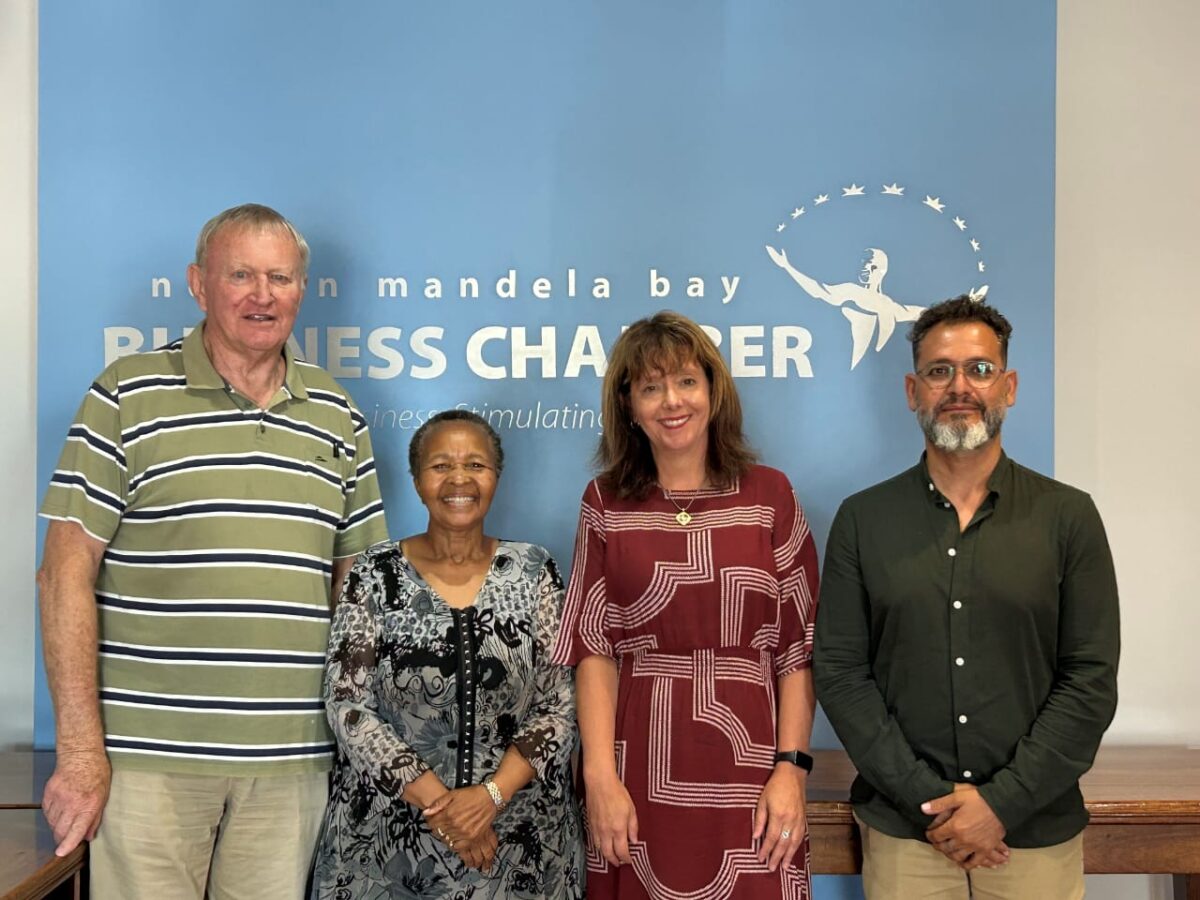
revor Jennings (Transformation Christian Network), Rev Dr Bukelwa Hans (Uniting Presbyterian Church), Denise van Huyssteen (Chamber CEO) and George Georgiou (Lead Pastor Father’s House Church).

Coega Skills Development Centre Welcomes 40 NARYSEC Trainees

2 February 2024 by Guest Leave a Comment

The Coega Development Corporation (Coega) Skills Development Centre (SDC) is pleased to announce the commencement of the National Rural Youth Service Corps (NARYSEC) Training Programme, inducting 40 learners from the Eastern Cape’s Chris Hani and OR Tambo Districts to qualify as maintenance and repair workers.

The 14 week training programme offers 82 credits in terms of the National Qualification Framework and is funded by the Department of Agriculture, Land Reform and Rural Development (DALRRD), with learners residing at the Coega Vulindlela Accommodation and Conference Centre (VACC) for the duration of their training.

The programme comprises a 60 day theoretical and practical workshop training phase, followed by a 42 day placement in various mega infrastructure projects to provide learners with practical exposure across diverse settings. Placements will be arranged on project sites where Coega operates as an Implementing Agent, involving the construction and renovation of public hospitals and schools across the Eastern Cape.

Mr. Siyanda Sihlahla, Coega SDC Electrical Facilitator, shared that the programme was meticulously designed, with the objective of equipping learners with fundamental knowledge and exposure to in-demand skills like general work and assistance artisans.

“Considering the unemployment rate, the programme is strategically geared towards providing learners with practical and valuable skills essential for securing employment across diverse industries,” said Sihlahla.

One learner from the Chris Hani District, Ms. Zodwa Mfama (27), expressed her excitement: “I am happy to be part of this programme. It will help me acquire useful skills that will contribute meaningfully to society and enhance my employability. I am eager to develop expertise that aligns with the needs of the workforce.”

The Coega SDC was established to contribute to the alleviation of socio-economic challenges through skills development and ancillary services, including needs- based short courses, learnerships, and apprenticeships.

To further enhance the employability and entrepreneurial competence of prospective artisans, the Coega SDC offers national trade tests for Painter and Joiner artisanal trades, having received Trade Test Centre (TTC) accreditation status in November 2022.

“Coega will assist trade test candidates to submit their applications to the National Artisan Moderation Body (NAMB). Successful applicants will be required to pay their trade test fees before undergoing the national trade test to become qualified artisans,” said Mr. David Lambaatjeen, Coega SDC Training Manager.

To further improve its service offering and scope of training, the Coega SDC has recently applied to the Quality Council for Trade and Occupations (QCTO) to offer credit bearing and nationally recognised skills programmes ranging from NQF level 1 to NQF level 4, including New Venture Creation; Workplace Preparation; Renewable Energy Workshop Assistant; and Bricklaying Assistant.

“The aim is to surpass our audited 2022/23 achievement of 3,932 individuals trained during the financial year,” concluded Lambaatjeen.

  • « Go to Previous Page
  • Page 1
  • Interim pages omitted …
  • Page 25
  • Page 26
  • Page 27
  • Page 28
  • Page 29
  • Interim pages omitted …
  • Page 37
  • Go to Next Page »

Footer

NMB Business News

  • NMBBC On Budget 2025
  • Leading Business Minds Set to Headline Chambers Annual General Meeting
  • Bay of Opportunity Portal
  • Bay of Opportunity Ambassadors Programme to Promote the Bay and Attract Investment
  • 6 Decades of Trucking
  • Thermal Camera Installed at Redhouse Substation
  • Finalist in the 2025 South African Car of the Year
  • Joining hands to create a lasting impact to St Albans Primary School
  • What does the Business Chamber hope to see in the Budget?
  • Robust Skilled Talent Required to Meet Industry’s Future Needs
  • Launch of Chamber’s Skills Development Desk Set to Address Local Skills Gaps and Boost Employment
  • Adopt-A-Substation Initiative Demonstrates Power of Collaboration
  • New Improved Crafter
  • Boost for Ducati South Africa
  • The all-new Volkswagen Tayron

Submit a Listing

Submit New Listing

Popular Listings

EXP South Africa

EXP South Africa

4 (1 review)
Moffett on Main

Moffett on Main

0 (0 reviews)
A V Officeware CC

A V Officeware CC

0 (0 reviews)

RSS feed: MyPR MyPR

  • Kalabari Kingdom Prepares for Historic December Coronation
  • Hitfire Digital Launches to Help Businesses Get Found in Search and AI Answers
  • How Middle East Innovation Is Reshaping Future Infrastructure
  • Synkra Technologies Opens Programme Access to South African Business Programmes, Incubators and Accelerators
  • Cyber Resilience Is the Foundation for Africa’s Next Phase of Digital Growth, Mastercard Whitepaper Finds

How you may use MyPE content © 2026 MyPE · Gqeberha, South Africa | Privacy Policy | MyPE Ads and Media Kit