
Four animal protection organisations; Beauty without Cruelty SA, United Front 4 Animals (UFA), OWL South African Faith Communities’ Environment Institute (SAFCEI) and Animal Voice, the official South African representative of Compassion in World Farming, are promoting and supporting a petition encouraging McDonald’s South Africa to adopt a cage-free egg policy in line with their international counterparts – McDonald’s US, Canada Australia and Europe – who have already committed to phasing out a cage-free egg policy within the next 10 years.
In September 2015, McDonald’s International committed to phasing out battery cages from their supply chain in Canada and the United States within 10 years.
McDonald’s has made previous animal welfare commitments (impacting its supply chains in Europe, North America, and South America), but no corresponding commitments have been made in South Africa.
Beauty without Cruelty SA, United Front 4 Animals (UFA), OWL, South African Faith Communities’ Environment Institute (SAFCEI) and Animal Voice, the official South African representative of Compassion in World Farming have added their voices to this campaign.
Since January 2016, Beauty Without Cruelty, United Front for Animals, and Southern African Faith Communities’ Environment Institute have written to Greg Solomon (CEO of McDonald’s South Africa) and Sechaba Motsielo (Corporate Affairs Director of McDonald’s South Africa), asking them to adopt a cage-free policy.
McDonald’s SA responded to Beauty Without Cruelty in February 2016: “McDonald’s South Africa takes note of the moves made by their USA and Canadian counterparts, and though we are exploring the viability of expanding McDonald’s cage-free policy to South Africa, we cannot at this stage, make a similar commitment as the one made by McDonald’s USA and McDonald’s Canada.”
A petition https://www.change.org/mcdonaldssacruelty was then started in March 2016 by a 23-year-old student, Yolanda Guse, who is a member of Beauty without Cruelty SA and has chickens at home as pets.
[Tweet “We’re still not lovin’ it! @McDonalds_SA Abusing Caged Chickens – https://www.change.org/mcdonaldssacruelty”]
Compassion In World Farming SA joined forces with the three animal protection organisations in March 2016 and added their voice to the campaign.
Consumers are not impressed and responded “we’re NOT lovin’ it, McDonald’s SA”.
Due to the petition’s media attention, McDonald’s South Africa released a statement, stating:
We take note of the moves made by our USA and Canadian counterparts to fully transition to cage-free eggs for all restaurants over the next 10 years. We are currently exploring the viability of expanding McDonald’s cahefree policy to South Africa and we will complete our investigation within a year.
Guse responded: “McDonald’s statement is nothing more than an attempt to delay action against the cruelty in their South African supply chain. Extensive scientific evidence shows that hens in battery cages are frustrated, distressed, and suffering, which is why the company has already adopted cage-free policies in EU, US, Canada, Australia, and New Zealand. McDonald’s needs to stop delaying and announce a 100% cage-free policy in South Africa. I’m truly disappointed by McDonald’s South Africa’s statement. Across the globe, including in South Africa, restaurants and supermarkets are moving away from eggs produced by hens confined in cages, proving that cage-free is both viable for businesses and better for the animals. No further investigation is required. McDonald’s South Africa needs to make a cage-free commitment today!”
In May and June 2016 McDonald’s South Africa added insult to injury with their promotion using Angry Birds characters to promote their Happy Meals to young children despite outrage from the South African public on the Company’s cruel treatment of the hens producing eggs for their restaurants.
“The latest McDonalds promotion, Angry Birds Happy Meals, leaves one pondering the mindset of the Company and the people McDonald’s SA employs for this work. The irony of Angry Birds is evidently lost as McDonald’s SA still refuses to commit to making this change. Extensive research shows that the hens suffer psychological stress, bone weakness and breakage, feather loss and disease. Standard factory-farm practices include slicing off parts of their beaks without painkillers, and manipulating their laying cycles by starving them,” says Toni Brockhoven, Beauty Without Cruelty National Chairperson, spokesperson.
Various local influencers have committed to supporting this cause including Miss Earth SA Carla Viktor, Braam Malherbe, Grant Hinds, Liezel van der Westhuizen, Miss Earth SA Organisation and lifestyle and wellness expert, Lisa Raleigh.
Despite more than 17 600 people signing the online petition and additional pressure from the four animal protection groups, media, and local celebrities, McDonald’s South Africa still won’t make a commitment to stop the suffering of their hens and commit to cage-free eggs.
Battery Cages:
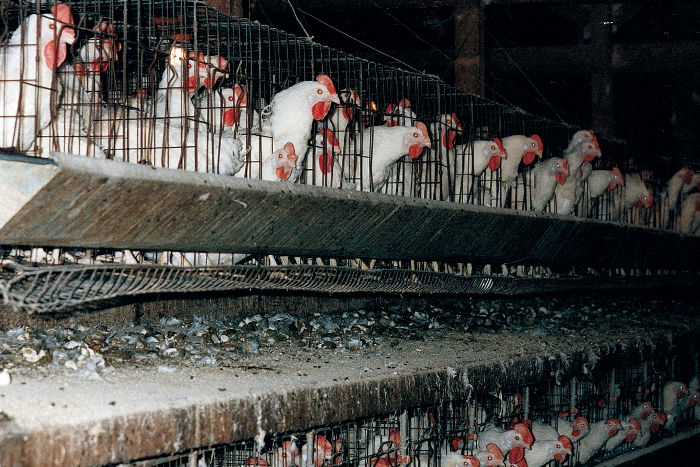
- A battery cage is a wire box, the size of an A4 paper, where hens spend their lives laying egg after egg for human consumption.
- These hens have no space to do any ordinary activities, such as spreading their wings, nesting, walking or perching. They will most never see the sunlight or take a breath of fresh air.
- Extensive research shows that the hens are frustrated and suffer psychological stress. They also suffer from physical harms, including bone weakness and breakage, feather loss, and diseases.
- To make matters even worse, standard factory-farm practices are inflicted upon them – slicing off parts of their beaks without painkillers and manipulating their laying cycles by starving them.
- Battery cage farms are a living hell for the innocent hens who lay eggs for McDonald’s South Africa.
- The female chicks have the ends of their beaks cut off with a hot blade.
- Five to 11 hens are crammed into tiny wire “battery” cages.
- On average, each hen has less living space than a standard piece of printer paper.
- The cages are often stacked on top of one another which allows urine and feces to fall down onto birds in the lower cages.
- Because of the terrible living conditions, chickens often die in their cages and sometimes left to rot in the same space with living birds.
The Egg Landscape:
- 7.8 billion eggs were produced in South Africa in 2015
- 46 million hens raised for their eggs
- Less than 5% are from cage free/free range facilities
- Research has shown egg production operations that confine hens in cages have higher rates of Salmonella compared to those that are cage free
- It takes approximately 34 hours for a hen to produce an egg
- More than 300 million hens are used by the U.S. egg industry every year
- Shortly after birth, the males and females are separated, the females head to a life in the egg industry and the males are either tossed into trash bags to suffocate or ground up alive.


Alan Straton
Latest posts by Alan Straton (see all)
- South African Conquers Rats on the World Stage - 30 October 2026
- Old JPG on a Memory Stick? Vectorization Studio in Observatory Redraws Faded and Low-Resolution Logos by Hand - 30 October 2026
- ReAutomated Adds Robot Palletising and Case Packing Cells to Existing South African Packing Lines Without Stripping Out the Conveyors - 30 October 2026
- From a 5 KM Sprint to an Ultra: Punisher Sets Out Its Magaliesberg Obstacle Race Formats for First Timers, Teams and Fitness Clubs - 30 October 2026
- Rotary or Dual Action? Germiston’s Polisher Lists Its Machines, Buffs and Compounds for Car Paint and Metal Finishing - 30 October 2026
