
Today’s posts from our featured Port Elizabeth Blogger:
Remembering the Slagtersnek hangings by The Firefly Photo Files:

If you are flying along in a northerly direction through the Karoo Heartland on the N10, the main drag between Port Elizabeth and Cradock, do slow down a bit after you pass the first turnoff to Somerset East and keep a look out on the right hand side of the road for a cenotaph like monument. Once spotted, do pull over and have a look as this is a very significant spot in the early history of the area.
I’m not going to relate the whole story here, but you can go and read the whole article about Slachter’s Nek on the Somerset East website. In short, the story is about a violent Boer uprising in the area late in 1815. After most of those involved either surrendered or were arrested, they were charged and either cleared, imprisoned or banished. Five were sentenced to death by public hanging at Van Aardtspos on 9 March 1816. The hangman never realised that there were five to be hanged so old rope was used. Four of the five ropes broke and Landdrost Jacob Culyer (of the Uitenhage district) ordered that they be hanged a second time, this time one by one. The monument contains the names of the five that was hanged as well as the Bezuidenhout brothers, who were whole reason the uprising started.
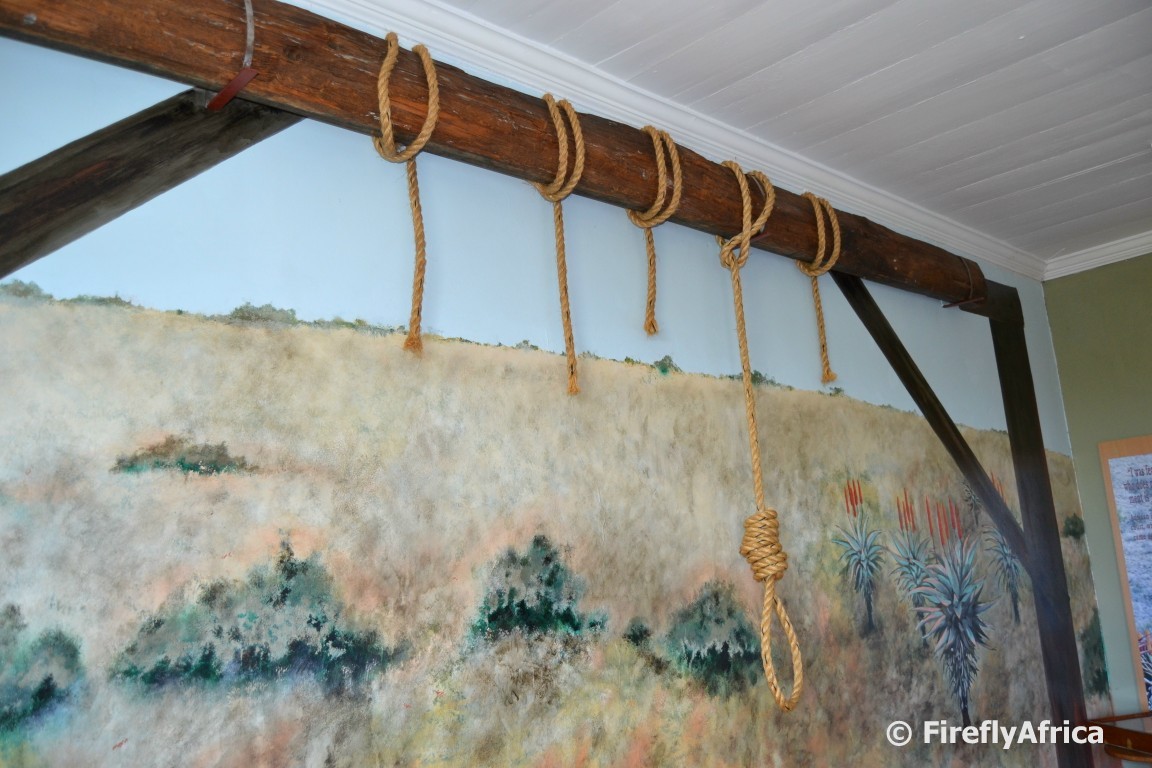
Another interesting link to Slagternek can be found in the Somerset East Museum in town. The original beam that was used for the hanging is on display in one of the upstairs rooms. After the hanging the beam was used as a support beam in a farmer’s pigsty where it was found in the late 1940’s and taken to the Voortrekker Monument. In 1989 it landed up in the Cape Town Historical Museum before it was eventually returned to Somerset East.
Read more here: The Firefly Photo Files
The Windpomp by The Firefly Photo Files:

The windpomp is one of the icons of the Karoo Heartland and as part of the landscape as Karoo koppies, sheep and Angora goats and a good ol’ farm gate. But have you ever wondered where the windpomp came from and how long they’ve been around?
The first windpumps were used to pump water since at least the 9th century in what is now Afghanistan, Iran and Pakistan. They later became widespread across the Muslim world and also spread to China and India. From the Middle Ages onward windmills were used extensively in Europe, particularly in the Netherlands and parts of Great Britain, to drain land for agricultural or building purposes.
Records show that windpompe were used in South Africa from 1869, although the earliest evidence of a windpump in the country comes from a painting drawn in 1848. These first South African windpompe were all wooden constructions with the first all steel windpump being patented in England in 1855. The first imported windpomp came to South Africa in 1874 and was a Standard Halliday that was erected on the farm of Mr P.J. du Toit in the Hopetown District.
The windpomp in the picture stands next to the road between Cradock and Middelburg in the Eastern Cape.
Read more here: The Firefly Photo Files
Click HERE to submit your blog to be part of this daily feature.
CLICK HERE to get a daily digest of PE Goodness straight into your inbox with the MyPE Monday to Friday Newsletter.
The following two tabs change content below.

Port Elizabethan
This author is a 'catch-all' for occasional articles and letters written to MyPE. The Author of each article can be found in the signature at the bottom of each individual article.
Latest posts by Port Elizabethan (see all)
- Why Fewer People Are Being Convicted for Commercial Crimes - 15 May 2026
- Urgent Call for South Africa to Support and Join Global Efforts to Phase Out Fossil Fuels - 15 April 2026
- Unfenced 6 SAI Army Base Outside Makhanda Claims Another Life - 20 November 2025
- Death Toll Rises From Makhado Bus Crash - 21 October 2025
- Law Clinics Flooded as Home Affairs Blocks Asylum Seekers From the System - 15 October 2025

In the words of the reputable then-landrost involved in the case, Andries Stockenstrom, not a single shot was fired during this rebellion. Other historians call it the “rebellion that never was”.
Perhaps its ignorance on your part then to label this public execution the result of suppressing a “violent Boer rebellion”.
In all fairness, given the historic context of the events, will you consider rewording after consulting better sources? I recommend reading AmaBhulu : Slagtersnek – where men die twice, for an objective and detailed historic account of those events.