
Female participation is falling in a field that is expanding globally and men still dominate the number of Science, Technology, Engineering and Mathematics (STEM) graduates in most countries, these were some of the concerns expressed by the United Nations Educational, Scientific and Cultural Organisation (UNESCO) recently. According to the UNESCO report “Cracking the code: Girls’ and women’s education in STEM”, only 35% of STEM students in higher education globally are women. For example, only 3% of female students in higher education choose information and communication technologies (ICT) studies.
The situation is also dire in South Africa as a few years ago the Engineering Council of South Africa put the total number of women engineers registered with the body to 11%. In the United States, women make up around a quarter of those in STEM occupations. STEM fields also have fewer women on boards than any other sectors. This gender disparity is alarming, especially as STEM careers are often referred to as the jobs of the future, driving innovation, social wellbeing, inclusive growth and sustainable development.
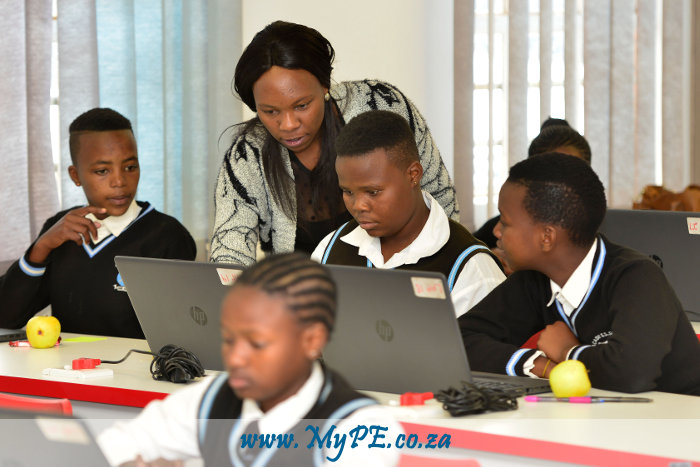
Coding is a way of solving problems, sequential thinking and stimulating, creating and designing. The ‘Code like a Girl’ programme aims to develop coding skills and valuable life skills for girls aged between 14-18 years, and encourages them to consider the uptake of ICT and STEM subjects. It provides influential mentors for the girls to inspire them to be passionate about technology and its possibilities. The programme was implemented in South Africa, Mozambique, Tanzania, DRC and Lesotho with over 755 young girls trained in 2019.
Mpumelelo Khumalo, Managing Executive for Vodacom Eastern Cape region said: “STEM fields are in desperate need of female representation, and the statistics prove it. We realise that coding has the potential to empower young girls and improve their chances of successfully integrating into STEM-related careers, and that is what we aim to achieve through this initiative. We’re essentially enabling them to take their first step towards prosperous careers within the next digital era.”
During the week-long training course, learners will exposed in basic knowledge of computer languages and development programmes including HTML, CSS, GitHub and Version control, Bootstrap, JavaScript and Basic Computer and Introduction to Coding. They will also be taken on a fun and empowering life skills journey while developing coding, presentation and communication skills – providing her with well-rounded development.
?
At the end of the week, each girl will know how to develop her own website and present her work to the rest of the coding class.
“The world is increasingly relying on technology, and by teaching young girls the skills and giving them access to the knowledge required to integrate into the digital era will enable them to fully benefit from the opportunities that will be housed in the Fourth Industrial Revolution,” concluded Khumalo.


Alan Straton
Latest posts by Alan Straton (see all)
- Soccer Laduma Urges SA Punters to Read the Terms Before They Bet This October - 21 October 2026
- Nifty Gifts Rounds up Spring Birthday Gifts and New Arrivals for Her - 21 October 2026
- Blackrock Towing Readies Gauteng Drivers for Spring Storm Season Breakdowns - 21 October 2026
- SAFRA Marks 15 Years and Nearly 500,000 Moving Quotes - 19 October 2026
- SAFRA Unveils Exciting Website Upgrade for Easier Moving Quotes - 19 October 2026
