
Every year the Democratic Alliance releases a Cabinet Report Card which grades cabinet ministers. Usually what happens then is that those who received the lowest grades are picked apart with scorn by all and sundry.
BUT, I propose that the DA take a different tack and concentrate on those who have done well whilst ignoring those who have not. The reasoning behind this is simple – By praising and raising the profile of those cabinet ministers who have done well the DA will then be sending a clear message to voters and those cabinet ministers that the party is one that lives by it’s credo of awarding excellence and only seeking excellent candidates to run our country.
As it is the DA awarded no A’s, one B, six C’s, twelve D’s, nine E’s and nine F’s.
The Cabinet Ministers that excelled (C’s and above) were:
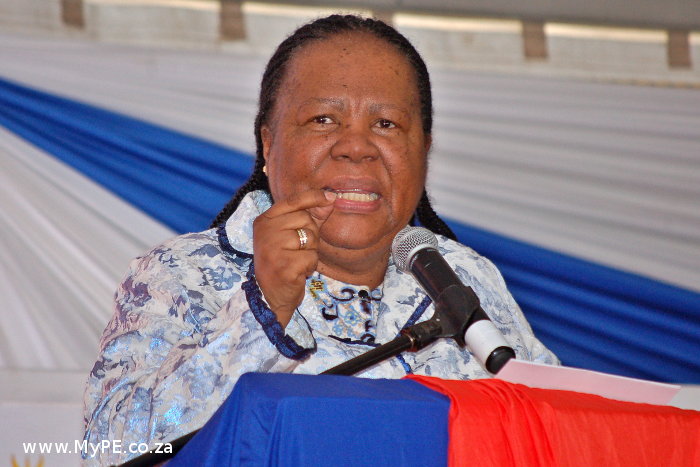
- B – NALEDI PANDOR: Science and Technology – The Minister has a clear and specific vision of what is required to promote science and technology in the country. She is well aware of the urgent need for new, young researchers, specifically African researchers. The increase of the SA Research Chairs is testimony to this. To the Minister’s credit she tries to deliver as much as possible with a very limited budget. She has also been open to suggestions as to how to increase the uptake of the Research and Development tax incentive. The Minister must also be commended for the role she plays in advancing South Africa on the international STI platform. This is done through the excellent work with Meerkat and the Square Kilometre Array.
- C – EDNA MOLEWA: Environmental Affairs – The quality of financial statements submitted by the entities for audit improved but the SANParks received an unqualified audit opinion. The SANParks audit outcomes have the bearing in scoring Minister Molewa performance. Another factor affecting the overall performance of the Department are the quality of financial statements submitted for audit by SANBI which regressed, causing a finding of material non-compliance.
- C – NHLANHLA NENE: Finance – The Minister has repeatedly warned that the biggest fiscal risks include weak economic growth, an above-inflation public sector wage agreement and additional direct support or guarantees for public entities. The Minister is going to have to toughen up if he wants to hold the fiscal line and contain big spending cabinet colleagues, who seem determined to risk fiscal oblivion, not to mention a sovereign ratings downgrade of South Africa.
- C – JEFF RADEBE: Planning, Monitoring and Evaluation – There seems to be sufficient evidence that the Minister has a vision and desire for a well-run Department of Planning Monitoring and Evaluation (DPME) with its finances well managed. Beyond that, things become quite diffuse because of significant overlaps with some of the functions of the Department and those of the Department of Public Service and Administration (DPSA) and the Public Service Commission (PSC).
- C – THULAS NXESI: Public Works – Minister Nxesi has candidly expressed his concerns regarding the poor state of the Department upon his arrival, even going as far as requesting that the Department be placed under administration. Being in charge of property and resources that are easy to loot and misuse, as well as being responsible for the accommodation of Cabinet Ministers, Minister Nxesi has been transparent on the mammoth task he has been allocated at the Department. However, the Minister fails to be honest on the public funds that have been utilised for the Nkandla homestead, which takes away from his ability to account. Overall, the Minister has been visible and respectful of Parliament.
- C – DEREK HANEKOM: Tourism – The Minister attended meetings when required. His input has always been constructive and co-operative. As far as written replies to Parliamentary questions are concerned, the content often lacked detail.
- C – AARON MOTSOALEDI: Health – On the positive side is the unqualified audit of the Department of Health. The progress made on the Medicines
and Related Substances Bill (the legislative framework for the South African Health Products Regulatory Authority), which replaces the Medicines Control Council, is a positive development in the Department. The Health Minister should be commended for his aspirational “Ideal Clinic” initiative, in which he has defined a model and a norm for what clinics in South Africa should look like and what they should deliver. Minister Motsoaledi has gone out of his way to find support to introduce these ideal clinics nationwide. He has also, to his credit, introduced regulations relating to Emergency Medical Services (EMS), stipulating how ambulances should be organised, how many there should be and what their normative response times should be; as well as regulating the operational side of EMS, including the training of individuals working in the sector. Minister Motsoaledi has invested in excellent initiatives when it comes to TB, extensively resistant TB and multi-drug resistant TB — at both hospital and clinic level. On a global level, his co-chairing of the Global TB Caucus is an admirable effort to get Parliamentarians worldwide to support the cause of fighting TB.
So there you have it DA – the above list is one that you can use to headhunt from to help ensure continuity and an inclusive cabinet going forward.
Oh, and by the way; “You’re welcome South Africa!”


Alan Straton
Latest posts by Alan Straton (see all)
- Just Some Tools Packs Six Clamps and a Pressure Card for Highveld Glue-Ups - 26 November 2026
- Phase Converters Sets Out How to Size a Rotary Unit From the Motor Plate - 26 November 2026
- Set-IP Puts Trade Mark Renewal Dates on a One-Page Wall Sheet for Makers - 26 November 2026
- Colour Planet Adds Catalogue Printing to Its Pinetown Litho Line - 26 November 2026
- From the Boot of a Car to Comrades Gold: 32GI, the South African Sports Nutrition Brand for Everyone - 25 November 2026
