
It is a given that countries with a strong maths and science ethic are countries that stand out and lead. South Africa is a country that reels from a dearth of engineers and highly qualified people just because science and maths are not seen as sexy enough by the vast majority of pupils. Couple that with a teaching body struggling to keep up with the subjects and constant change and we have a recipe for disaster.
In the Eastern Cape we have pockets of excellence which are, mostly, confined to the urban areas. But, the 2014 Matric results uncovered a gem, an anomaly, a glittering vein of hope. In an Eastern Cape district that bears the name of Chris Hani, we find Cofimvaba which is a rural area with a rich history of struggle and now learning. In 2014 Luvo Luzipho, a matric pupil from St James Secondary School in Cofimvaba became the national top achiever in the quintile 3 category and second in the combined mathematics and physical science category in the country. He started studying actuarial science this year.
A 12 June visit to the Mvuzo Secondary School in Cofimvaba, as a guest of Air Products, revealed to me that the pupils from St James are shining products of their alma mater. Waiting to gain entry to one of the many exhibitions at the Cofimvaba event I engaged one of the waiting pupils in conversation only to find out that this pupil, with even better manners and diction than most of my peers, was a proud ambassador for St James – erudite and proud and a credit to his school and district.
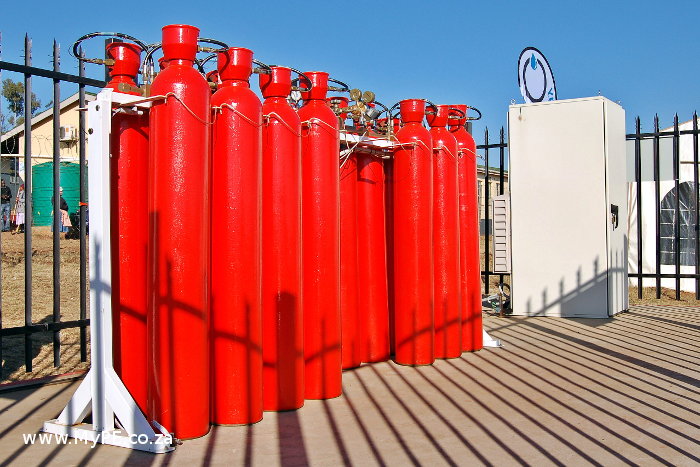
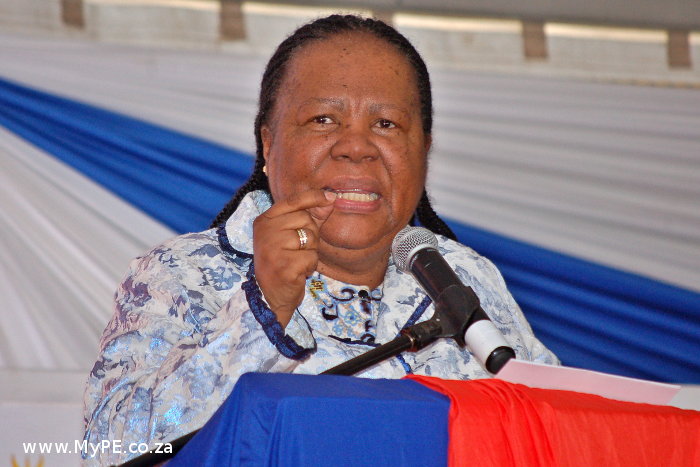
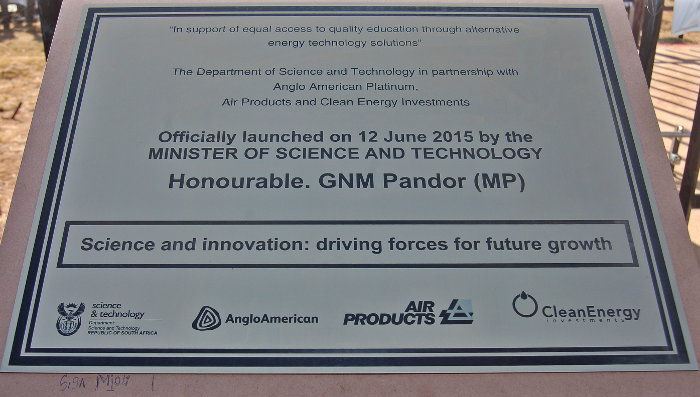
On Friday, 12 June 2015, Minister Naledi Pandor from the Department of Science and Technology (DST) unveiled hydrogen fuel cells which provide standby power to three schools in Cofimvaba, Eastern Cape, as part of its Technology for Rural Education Development (TECH4RED) project.
The fuel cells, which have been operating at St Marks Junior Secondary School, Arthur Mfebe Senior Secondary School, and Mvuzo Junior Secondary School since September 2014, were commissioned by Clean Energy Investments, a South African company co-owned by the DST and Anglo-American Platinum (AAP).
AAP sponsored the three platinum-based fuel cell systems, including installation and ongoing maintenance and operations, while Air Products supplied the hydrogen fuel tanks and fuel. All three companies have committed to continuing with their sponsorship for three years.
If you think with your suburban head then the maintenance and topping up of the fuel cells doesn’t sound like a big deal but, as Air Products Managing Director Mike Hellyar explained; “The hydrogen is manufactured in Vanderbijlpark, trucked to Port Elizabeth and then trucked to Cofimvaba.” This is a distance of around 1 500 kilometres and, even with hydrogen priced at around R4.00 per kilogram, one can appreciate the considerable transport expense for this consumable.
The estimate is that the cost to run each fuel cell is around R35.00 per kWh. Each hydrogen fuel cell produces 5 kWh’s and, without the plinth and surrounding security cost around R135 000.00.
The DST and TECH4RED have added another element to the mix with the supply of tablets to rural pupils – which they recharge using the hydrogen fuel cells.
TECH4RED (Technology for Rural Education Development) is a project initiated by the Department of Science and Technology (DST) which uses technology, science and innovation to improve the quality of rural education. TECH4RED has been implemented in 26 schools in the Cofimvaba district in the Eastern Cape, where students and teachers have been given tablets in order to enhance the learning/teaching experience.
As Sizwe Nkonde, General Manager, Packaged Gas: Air Products South Africa said; “…this project represents a new era in education, because it brings together technology and innovation in ways which have never been done before in this country. It demonstrates in a very novel and tangible way, the impact that technology can have on the quality of our education and the future of our country. This initiative, as part of the wider TECH4RED pilot project, also paves the way for a new era in energy efficiency, and it is teaching our children how power can be sourced in inventive, yet clean and environmentally-friendly ways.”


Alan Straton
Latest posts by Alan Straton (see all)
- Embroidery or Print? EMB Designs in Durban North Checks the Artwork and Runs a Sample Before a Full Staff, School or Club Order Is Stitched - 4 November 2026
- PrintAcademy 3D in Stellenbosch Trains Teachers First, Then Learners, so School 3D Printers Get Used Beyond the First Term - 4 November 2026
- From Estate Agency Posters to Museum Panels: Laminator in Kya Sand Lists Which Jobs Call for Cold or Hot Roll Wide-Format Laminating - 4 November 2026
- LaserTube Brings Fibre Laser Tube Cutting Machines to South African Fabricators, From Compact Shop Units to Bundle Loading Production Cells - 3 November 2026
- SubAlu Sublimates Photographs Onto Aluminium Panels in Randburg, From A4 Gifts and Square Prints to A1 Statement Pieces and Panoramas - 3 November 2026
