
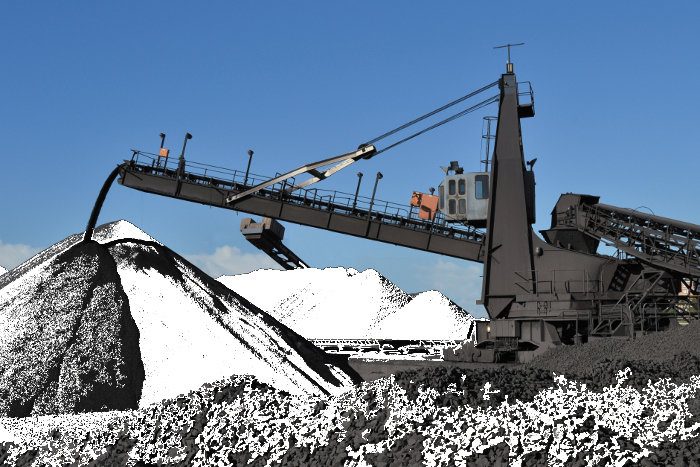
The study of the negative effects on the human body through prolonged exposure to Manganese led to the identification of Manganism or manganese poisoning – a toxic condition resulting from chronic exposure to manganese – in 1837 by James Couper.
Generally, exposure to ambient manganese air concentrations in excess of 5 micrograms Mn/m3 can lead to Mn-induced symptoms.
In initial stages of manganism, neurological symptoms consist of reduced response speed, irritability, mood changes, and compulsive behaviors. Upon protracted exposure symptoms are more prominent and resemble those of idiopathic Parkinson’s disease, as which it is often misdiagnosed, although there are particular differences in both the symptoms (nature of tremors, for example), response to drugs such as levodopa, and affected portion of the basal ganglia. Symptoms are also similar to Lou Gehrig’s disease and multiple sclerosis.
Reference: Manganism on Wikipedia.
There used to be an extensive monitoring programme on the Manganese Ore Dust within the Port of Port Elizabeth but it appears that the once highly visible collection stations that dotted the Port have gone walkabout.
One wonders if the findings were too alarming for the study to continue?
Bazooka – Cocaine-Base and Manganese Carbonate Drug
A February 1985 letter to the editor of the Journal of Analytical Toxicology, penned by Jaap G. Ensing of the Department of Toxicology and Pharmaceutical Quality Control Public Health Laboratory in the Netherlands Antilles, warns of of the drug Bazooka.
Apparently at the time, Bazooka was a comparatively cheap cocaine-base product obtained at an early stage in the process of coca-leaf extraction. This product was cream to light brown in color due to the presence of manganese carbonate.
Bazooka was smoked in cigarettes for an effect comparable to that obtained from “free-basing”, leading to high levels of cocaine in the blood for a short time.
Interestingly Ensing warns in his letter that persons indulging in smoking several grams of bazooka daily ran the risk of both cocaine and manganese intoxication due to the relatively small respirable particles (less than 5 micrometres in diameter) of manganese that would be inhaled.
Could this be the reason why many people in the Port appear drunk despite not having had a drink?
CLICK HERE to take part in a survey seeking to establish the true cost of the Port Elizabeth Manganese Ore facility on the surrounding area.
In May 2016, Karl Socikwa, Transnet Port Terminals chief executive, spoke about all of South Africa’s big mineral outputs including coal, iron ore and chrome as well as manganese that had been hit by the dramatic fall in commodity prices, “weak demand” resulting in “realigned” priorities says Mr Socikwa, adding: “We haven’t cancelled our plans… manganese is still one of our core businesses and we have to support that.”
But, Mr Socikwa; “What is the cost of your ‘realigned priorities’ on the Port Elizabeth public?” we have to ask.


Alan Straton
Latest posts by Alan Straton (see all)
- SmashDown Lists Its Woodstock Rage Room Packages for Cape Town Friends, Couples and Staff Teams - 29 October 2026
- SmashDown Lists Its Woodstock Rage Room Packages for Cape Town Friends, Couples and Staff Teams - 29 October 2026
- Psycho Bunny Brings Summer Polo Shirts and Swim Shorts to South Africa - 28 October 2026
- Psycho Bunny Brings Summer Polo Shirts and Swim Shorts to South Africa - 28 October 2026
- e-CAR Menlyn Helps Pretoria Drivers Prepare Their Cars for a Hot Festive Season - 28 October 2026
