
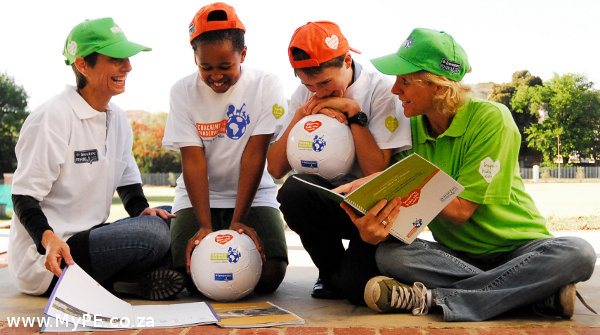
Inspiring a generation of “kids who care,” is the goal of Coaching for Conservation (C4C) – an acclaimed education programme which uses sport to build self-esteem and environmental awareness amongst learners.
Investec Rhino Lifeline, has partnered with Coaching for Conservation (C4C), to engage with 13 disadvantaged primary schools in the Eastern Cape in a programme designed to raise awareness of the rhino crisis amongst learners. It involves the children in creating conservation solutions through its unique education model.
The eight week pilot programme kicked off on Monday, October 07, 2013 and will run daily as an afterschool programme until the end of November 2013.
Investec Rhino Lifeline’s Dr William Fowlds has worked closely with Lesley McNutt of C4C to create a bespoke rhino edition of the Coaching for Conservation curriculum. Dr Fowlds’ experiences have helped design field excursions for the programme to meaningfully engage learners in wildlife conservation through the vehicle of sport.
“Investec Rhino Lifeline seeks to raise awareness of the rhino crisis and to respond through education, rescue and prevention initiatives. Its aim is to preserve South Africa’s natural resources by using this educational programme to engender self-respect and inspire a generation of children who have a love for nature and the world around us,” commented Dr Fowlds.
Coaching for Conservation was launched 10 years ago in Botswana as the primary social development programme of the Botswana Predator Conservation Trust (BPCT). C4C has been supported by Investec Asset Management since 2010 and is endorsed by its long-term funding partner, the Tusk Trust.
Lesley McNutt, the brainchild behind Coaching for Conservation, said: “Coaching for Conservation started as a means to address the need for an essential shift in fundamental core values: respect for self and the environment, and maintain a positive outlook for the future. We’ve recognised the need for our conservation messaging to have a greater impact and use sport, which inherently creates a fun and receptive environment for learning, as a teaching means.”
The Learning from Wildlife Model builds respect for, and a relationship with, animals by linking professional coaches, environmental educators and animal mentors in every lesson to deliver the key messages: Respect yourself, Respect Each Other and Respect your Environment
The programme aims to help children build self-esteem, engage in constructive social exchange and develop an awareness and sensitivity to the environment in which they live and play.


Alan Straton
Latest posts by Alan Straton (see all)
- South African Conquers Rats on the World Stage - 30 October 2026
- Old JPG on a Memory Stick? Vectorization Studio in Observatory Redraws Faded and Low-Resolution Logos by Hand - 30 October 2026
- ReAutomated Adds Robot Palletising and Case Packing Cells to Existing South African Packing Lines Without Stripping Out the Conveyors - 30 October 2026
- From a 5 KM Sprint to an Ultra: Punisher Sets Out Its Magaliesberg Obstacle Race Formats for First Timers, Teams and Fitness Clubs - 30 October 2026
- Rotary or Dual Action? Germiston’s Polisher Lists Its Machines, Buffs and Compounds for Car Paint and Metal Finishing - 30 October 2026
