
I’ve never been someone who only waxes lyrical, despite the fact that I studied to be a lawyer – and that’s why I completely endorse initiatives that prioritise action over apathy. The Wheelchair Wednesday project is one of those ideas that dispels inertia and prioritises activity.
As a brainchild of our very own Association for Persons with Disabilities (APD), the Wheelchair Wednesday campaign is about highlighting the challenges experienced by people with disabilities, particularly those who are wheelchair-bound.
By using high profile industry leaders to elevate the needs of people with disabilities onto the agenda, the drive is successful in sensitizing decision-makers, who can play a role in ensuring changes are made to accommodate people with disabilities. I participated in this incredible campaign last year and through it, on a minute level, grasp the myriad of access challenges encountered by people with disabilities.
But we are also governed in South Africa by legislation on equality, access and opportunity. Having studied law, I know full well what the law says.
The 1995 White Paper on the Transformation of the Public Service identified a 2% disability equity target for the employment of people with disabilities in the public service, with a deadline of ten years. By April 2005, the reported percentage of employees with disabilities in the public service was only 0.15%. The deadline for this target has since been extended twice – first to March 2010 and most recently to 2014.
Although we are not directly in the public service at Access Management, we do run a publicly owned building – and we commend the vision enshrined in the white paper.
The legislation and the Wheelchair Wednesday initiative have got me thinking, thinking about how planning ahead changes everything.
We at Access Management, operators of the Nelson Mandela Bay Stadium, are all about access. From the outset the stadium was well-planned and access was a key consideration for getting people in and out – something we can do in less than 21 minutes with a full house. It was built so that all the people of the Metro – who actually own this incredible venue – could have access to it and the activities happening within and outside its walls.
We also ensured that people with disabilities were catered for and could access stadium events by ensuring ramps, lifts and special seating was in place.
The stadium has:
- Disabled friendly seats
- Ramps
- Disabled parking bays
- Lifts
- Disabled friendly toilets
Wheelchair Wednesday is happening again this year in July – where over a hundred Nelson Mandela Bay business executives will spend four hours in a wheelchair and donate wheelchairs to beneficiaries vetted by APD – and the stadium is once again intimately involved in the campaign.
We will host the handover of those wheelchairs in August – and watch this space, we might have a special guest speaker – but we are also making a commitment to re-look at the stadium to see how we can make it even more accessible and user friendly to people with disabilities. This includes adding more parking bays, as well as providing detailed signage so people can find seats and ramps more easily.
Not only have we made the stadium accessible for events, but also for employment and we are committed to employing people with disabilities when opportunities arise. Technological advances have removed many of the obstacles faced by people with disabilities pursuing careers of their choice – and with some forward planning as well as out-of-the-box thinking any remaining obstacles can be overcome. This is also what Wheelchair Wednesday wants to drive home. There are challenges, but there are far more opportunities and rewards for open-minded companies.
Former President Thabo Mbeki, in his introduction to the Integrated National Disability Strategy (1997), said; “the concept of a caring society is strengthened and deepened when we recognise that disabled people enjoy the same rights as we do and that we have a responsibility towards the promotion of their quality of life. We must stop seeing disabled people as objects of pity but as capable individuals who are contributing immensely to the development of society”.
The strategy represents a paradigm shift in the conceptualisation of disability from the medical or welfare model (in which people with disabilities are seen as unproductive and in need of care) to a social model that recognises their rights. With between 5 and 12% of South Africans moderately to severely disabled, the role people with disabilities can play in socio-economic development is significant.
We welcome disabled people with skills to apply for jobs when they become available at the Nelson Mandela Bay Stadium just as we welcome people with disabilities to come share a in the excitement of game days, concerts and just about any event on offer at the stadium – we are committed to sharing future moving moments at the stadium with you.
Chantal Du Pisani
Nelson Mandela Bay Stadium CEO
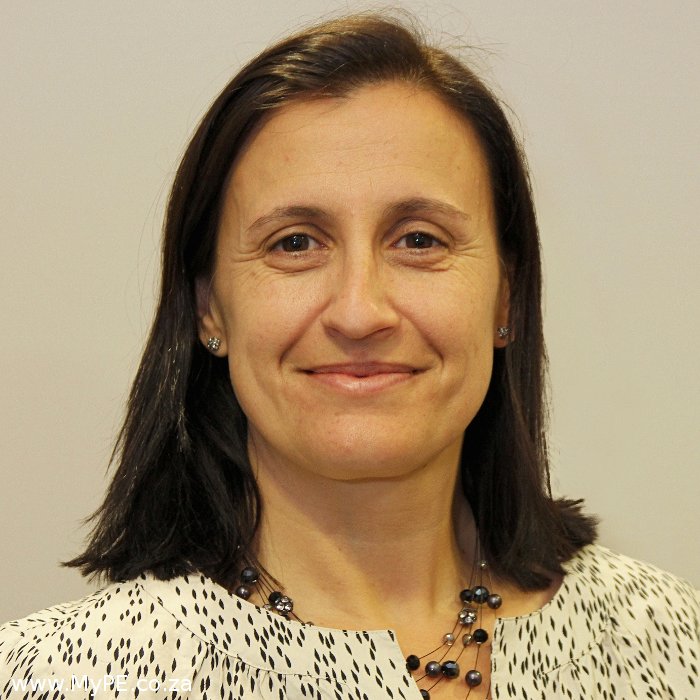
Chantal Du Pisani. Nelson Mandela Bay Stadium CEO

Port Elizabethan
Latest posts by Port Elizabethan (see all)
- Why Fewer People Are Being Convicted for Commercial Crimes - 15 May 2026
- Urgent Call for South Africa to Support and Join Global Efforts to Phase Out Fossil Fuels - 15 April 2026
- Unfenced 6 SAI Army Base Outside Makhanda Claims Another Life - 20 November 2025
- Death Toll Rises From Makhado Bus Crash - 21 October 2025
- Law Clinics Flooded as Home Affairs Blocks Asylum Seekers From the System - 15 October 2025
