
Water hazards in flood-prone Missionvale township a key focus area for students from the Massachusetts Institute of Technology (MIT) and Nelson Mandela Metropolitan University and as a result forty-three students from the Massachusetts Institute of Technology (MIT) – currently the world’s top-ranked university – are in the Bay this week to tackle Eastern Cape water issues with 25 students from Nelson Mandela Metropolitan University (NMMU).
The students – who are respectively from MIT’s Terrascope and NMMU’s Earth Stewardship programmes, both of which take a multi-disciplinary approach to solving real, complex problems affecting the earth – will hone in on township water hazards, focusing specifically on Missionvale township.
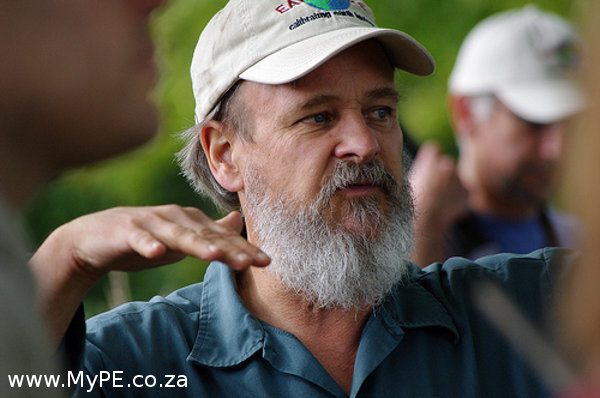
“Missionvale flanks an inland ‘bowl’ – a natural old salt pan – which is prone to flooding,” said Prof Maarten de Wit, who heads up NMMU’s Earth Stewardship Science Research Institute (ESSRI) and was instrumental in organising MIT’s visit. “There has been little thinking about long term solutions to flood hazards, and there is no water or sanitation service in this area to speak of. With climate change, there will be a further increase in precipitation in this area.”
On Monday, the students were split into groups, which included community members and environmental experts, before exploring on foot the informal settlements of Missionvale, Rolihlala, Soweto-on-Sea, Zwide and Veeplaas – and later brainstorming workable solutions, taking into account municipal plans as well as engineering and socio-economic factors. They also visited a New Brighton school which has no access to water – and attended a panel discussion at South End Museum to give them a taste of South African politics.
De Wit said one of the main aims of the trip was to spark lifelong relationships between the American and South African students. “We want them to be talking to each other for the rest of their lives, and to focus on complex problems that their generations will be faced with over the next 10 to 50 years.”
On Tuesday, a number of South Africa’s water-related issues will be discussed on NMMU’s South Campus, culminating in a debate with audience participation, themed: “Are there no sustainable solutions to water shortage in South Africa?”
The students will also visit NMMU’s George Campus, where they will be exploring water issues in relation to agriculture, forestry, ecosystems, indigenous plants, social issues and heritage. The campus will host a second public debate on Thursday on Africa’s millennium villages themed: “Are we importing/exporting American products, or helping Africans helping themselves?”
The week-long program began on Sunday with a visit to Addo Elephant National Park, led by zoology professor Graham Kerley, who heads up NMMU’s Centre for African Conservation Ecology. He spoke on water issues related to elephants conservation and water holes and maintaining ecosystem services for Africa.
The QS World Universities 2013/14 rankings, published in September, positioned MIT as the top-ranked university worldwide.


Alan Straton
Latest posts by Alan Straton (see all)
- SAFRA Marks 15 Years and Nearly 500,000 Moving Quotes - 19 October 2026
- SAFRA Unveils Exciting Website Upgrade for Easier Moving Quotes - 19 October 2026
- SAFRA Launches Powerful New Furniture Volume Calculator - 19 October 2026
- What Parents Need to Know about Polio - 19 October 2026
- Rodent Checks Should Include the Parked Car, Says Gqeberha Pest Control Operator - 19 October 2026
