
This image referencing ‘Algoa Bay’ is courtesy of Flickr. Click on the name of the Flickr account holder below the photograph to see more images.
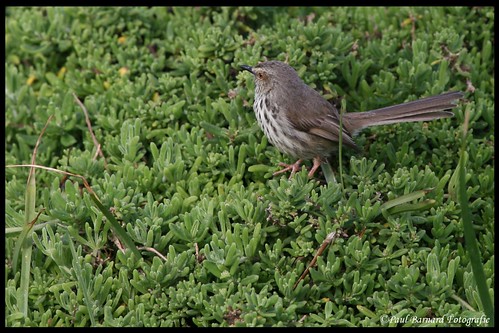
Karoolangstertjie
Alternative Names:
English (Rob 6): Karoo Prinia
English (Rob 7): Karoo Prinia
German: Fleckenprinie
French: Prinia du Karoo
Indigenous: Ujiza(X),Motintinyane(SS),Scientific Explained:
maculosa: Latin, spotted or speckled.
prinia: Javanese prinya, a small bird (possibly a prinia, either P. atrogularis or P. familiaris).
Measurements: Length 13-15 cm; wing (16 male) 47-53-58, (12 female) 48-50,5-53; tail (28) 60-80; tarsus (28) 19-22; culmen (28) 10,5-12. Weight (2 male) 8,2-10 g, (1 female) 11,1 g, (47 unsexed) 6-9,4-20 g.
Bare Parts: Iris light brown; bill blackish; legs and feet pinkish brown.
Identification: Size small; tail long, often cocked over back; above warm brown; eyebrow, face and throat whitish; rest of underparts white (lemon yellow in Spotted Prinia), throat, breast and flanks clearly streaked black (diagnostic); tail tipped pale brown, with subterminal blackish spot. Immature: Above tinged rufous; below yellowish with dusky streaks.
Voice: Loud explosive kli-kli-kli-kli, similar to calls of Blackchested Prinia, but somewhat more ringing; rasping krrrt krrrt (probably not distinguishable from calls of Spotted Prinia); various chipping and reedy piping notes.
Distribution: Western and sw Cape (E to about Algoa Bay), Karoo, Lesotho, Free State, s Namibia.
Status: Common resident.
Habitat: Karoo, fynbos, coastal and montane scrub.
Habits: Usually in pairs when breeding; otherwise in small groups. Forages low down in grass, weeds and bushes; sometimes hawks insects in flight. When disturbed perches on top of tall plant, flicking tail and calling; responds well to spishing (see Glossary); when closely approached, dives into vegetation and disappears. Becomes tame in gardens.
Food: Small insects.
Breeding: Season: July to December in sw Cape, October to March in e Cape. Nest: Oval with side-top entrance, woven of thin green grass blades which dry firm and brown; lined with plant down; 30-55-100 cm above ground (370 nests) in bush or dense grasstuft; rarely uses old nests of Red Bishop or Yellowrumped Widow. Clutch: (296) 2-3,7-5 eggs (usually 4). Eggs: Pale blue, spotted and blotched with greyish brown, chestnut and lilac mainly at thick end; measure (328) 16,4 x 11,7 (14,5-20 x 10,8-12,8). Incubation: (17) 13-14-17 days by both sexes. Nestling: (14) 13-14-16 days; fed by both parents.
Ref. James, H.W. & Brooke, R.K. 1972. Ostrich 43:137-138.
Rowan, M.K. & Broekhuysen, G.J. 1962. Ostrich 33(2):6-30.
This image is automatically selected as it was published with this keyword/s relevant to Port Elizabeth: Algoa Bay. Please – CLICK HERE to report any ‘offensive’ images. Don’t forget to support and thank the photographer.
Submit your own Port Elizabeth images here.

Port Elizabethan
Latest posts by Port Elizabethan (see all)
- Why Fewer People Are Being Convicted for Commercial Crimes - 15 May 2026
- Urgent Call for South Africa to Support and Join Global Efforts to Phase Out Fossil Fuels - 15 April 2026
- Unfenced 6 SAI Army Base Outside Makhanda Claims Another Life - 20 November 2025
- Death Toll Rises From Makhado Bus Crash - 21 October 2025
- Law Clinics Flooded as Home Affairs Blocks Asylum Seekers From the System - 15 October 2025
