
Tourism Minister Derek Hanekom says continued investment in tourism is paying off through job creation, the growth of SMMEs and rural development.
The tourism sector directly employed 617 000 people in 2012, which made up 4.6% of the total workforce then.
“If we add indirect employment, it exceeds 1.4 million people – roughly 10% of the total workforce. This represents an impressive annual growth rate of 4.7% over the past 20 years,” said Minister Hanekom in Parliament on Wednesday.
The minister was delivering the Budget Vote Speech for his department, which has been allocated R1.6 billion for the 2014/15 financial year.
He said the tourism balance sheet must show that government is delivering on the promise of a better life for all South Africans.
In his 2014 State of the Nation Address (SoNA) on 17 June, President Jacob Zuma said South Africa’s tourism sector continued to show positive growth last year, despite tough global trading conditions in traditional markets.
President Zuma said the sector reached a record of 9.6 million international tourist arrivals in 2013.
“We have set a target to increase the number of foreign visitor arrivals to more than 15 million annually by 2017,” President Zuma said.
He said his government was also looking at increasing the contribution of tourism to the country’s revenue to more than R125 billion by 2017.
Minister Hanekom on Wednesday applauded SA Tourism for doing a “great job” in marketing the country, and said it will be allocated about R300 million to expand their marketing presence in Africa.
While SA Tourism offices will be opened in Brazil this September, four other marketing offices will be opened across Africa over the next few years.
“SA Tourism’s Sho’t Left marketing campaign for domestic tourists is already delivering results, and will be bolstered in the next financial year by another R100 million in secured ring-fenced investment,” said Minister Hanekom.
“The positive brand awareness that SA Tourism has built also finds expression in how we have modernised INDABA, the biggest trade show on the continent.”
Minister Hanekom said the economic potential of tourism for the country needs to be maximised for the benefit of citizens.
“As tourism happens in local communities, this is where tourism should deliver significant and meaningful economic benefits,” Minister Hanekom said.
Additionally, the minister said tourism information centres need to be equipped with touch-screen portals that are user friendly.
“We will link these information centres to similarly branded centres at our main tourism attractions around the country, so that we do more to encourage tourists to visit our hidden gems in all corners of our country,” said Minister Hanekom.
Developments over the last 20 years:
- The number of accommodation establishments has almost tripled, from just 7 721 to almost 20 000.
- Conference venues have almost doubled, from 1 250 to 2 598.
- The fleet of cars and coaches has more than doubled, while the number of airlines flying to South Africa has grown from 21 to 76.
- In 2012, according to Stats SA, tourism’s direct contribution to gross domestic product (GDP) was R93 billion, with a staggering annual average real growth rate of 7.3% over the past 20 years.
- International tourist arrivals to our shores grew to almost 10 million last year. – More Matshediso, SAnews.gov.za
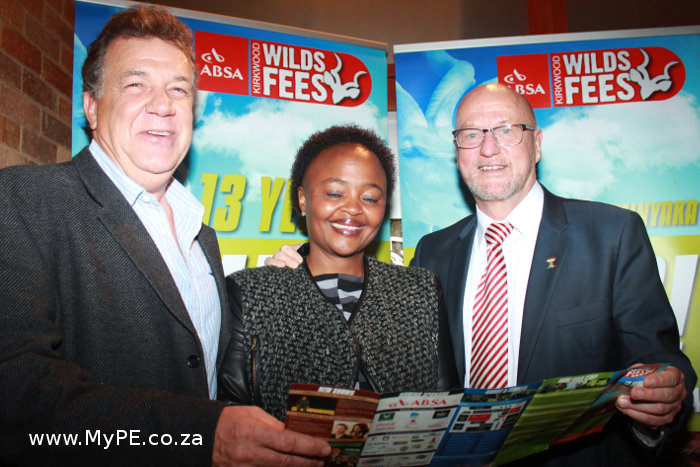
Speaking at the opening of the 13th annual Absa Kirkwood Wildsfees on 26 June 2014, South African minister of tourism Derek Hanekom said game farming helped promote tourism into the Sundays River Valley and other areas where the environment and land was not suited to intensive livestock farming.
He called on the game farming industry to “collectively do more to change perceptions about the sector.
“Game farming is by far the best land use option in many parts of the country,” he said.
One of the arguments against game farming is that it impacts on food security.
Well-managed game farms produced more protein per hectare than cattle or sheep because the variety of game utilised different types of vegetation, he said.
Game farming – or mixed game and stock farming – also sustained more jobs than traditional stock farming because of the tourism element.
The additional jobs created by tourism also contributed to food security.
People with jobs do not suffer from the same food shortages as those who are unemployed, he pointed out.
Sustainable land use and the growth of the tourism industry also go hand in hand with heritage tourism, a sector with big potential in the Eastern Cape.
Plans for a heritage route through the Zuurberg in the Sundays River Valley are being formulated.
The heritage tourism could be developed around the natural beauty of the area – which is being preserved in part by sustainable game farming.
Community-driven events such as the Absa Kirkwood Wildsfees are also contributing to the growth of tourism, he said.
The festival has grown into one of the biggest in the country.
It is also a festival with a social conscience. Money is ploughed back into the community by the non-profit Kirkwood Wildlife Festival company, he said.
The annual Absa Kirkwood Wildsfees takes place in the Eastern Cape’s Sundays River Valley from Friday, June 27 to Sunday, June 29.


Alan Straton
Latest posts by Alan Straton (see all)
- Top Click Explains Who Its SEO and Google Ads Service Is For - 17 October 2026
- Sky Dental Helps Sandton Plan Cosmetic Care Before December - 17 October 2026
- H2O Guru Offers SANS1657 Bottled Water Testing for Summer - 16 October 2026
- The Gold Avenue Flags the 91.67% Krugerrand Seller Mistake - 16 October 2026
- Does Your Finance Team Spend More Time Preparing Reports Than Analysing Them? - 16 October 2026
