
The NMMU Council has noted with grave concern the passing of the Protection of State Information Bill on 21 November 2011 by the National Assembly of Parliament in Cape Town by a majority of 229 to 107 votes. We note that parliamentary process requires the Bill to be forwarded to the National Council of Provinces (NCOP) for its consideration, and hope an opportunity would be afforded to the wider public for further input to ensure the Bill is in line with the basic tenets and requirements of South Africa’s Constitution.
The University Council acknowledges that there is a need to replace the old apartheid secrecy legislation (i.e. Protection of Information Act of 1982) that is clearly not in line with our democratic Constitution. Council also acknowledges that lawmakers have listened to civil society voices in calls for a major revision of earlier versions of the Bill, and also that some progress has been made in improving specific aspects. We note, for example, the insertion of a clause prohibiting ‘classification of information’ being used “to conceal an unlawful act or omission, incompetence, inefficiency or administrative error; restrict access to information in order to limit scrutiny and thereby avoid criticism; prevent embarrassment to a person, organization, or organ of state or agency; unlawfully restrain or lessen competition or prevent, delay or obstruct the release of information that does not require protection under the Act” (Protection of Information Bill, 2011).
However, we believe that the Bill, in its current form, conflicts with other basic tenets on the right to public access to information, notably, Sections 16 and 32 of the Constitution and the Promotion of Access to Information Act (PAIA) of 2000. In its current form, the Bill fails to provide for a sufficiently strong and clear ‘public interests’ defence clause in relation to information deemed as ‘classified’. The expansive and open-ended manner in which ‘classified information’ is defined in the Bill is deeply problematic for two reasons. Firstly, it shuts out any critical scrutiny into what constitutes ‘national interests’ and ‘national security’. The danger of this inscrutable use of ‘classified information’ being used to place certain kinds of official practices beyond public scrutiny has most recently been seen, in an extreme form, in flagrant human rights abuses in the name of the so-called ‘war on terror’ as occurring in many parts of the world.
Secondly, despite the Bill’s contention that ‘classified information’ may not be used for purposes of concealing unlawful, corrupt and inept practices by state officials, there is nothing in the Bill that prevents this from taking place as the prerogative of determining if this is the case or not depends on state authorities.
As it stands, the Bill will close off many state practices deemed as ‘classified’ beyond the scrutiny of the public and raise the costs of whistle-blowing on administrative malpractice or corruption. It will limit the ability of the public – media, civil society and universities – to rationally debate what is in the public interests and what is not. We do not believe that such crucial decisions can only be left in the hands of state officials. The negative impact of the Bill on access to information and freedom of speech poses a direct threat to the role of universities whose role is to speak truth to power. Council agrees with the statement by Higher Education South Africa (HESA) that ‘without access to information the process of knowledge generation is hampered, and without freedom of speech, academic freedoms are placed in jeopardy’ (HESA, 31 August, 2011). Council therefore calls upon Parliament to drastically review these limitations placed on access to information and freedom of speech as contained in the Bill and bring the proposed legislation in line with the promise of our democratic Constitution.
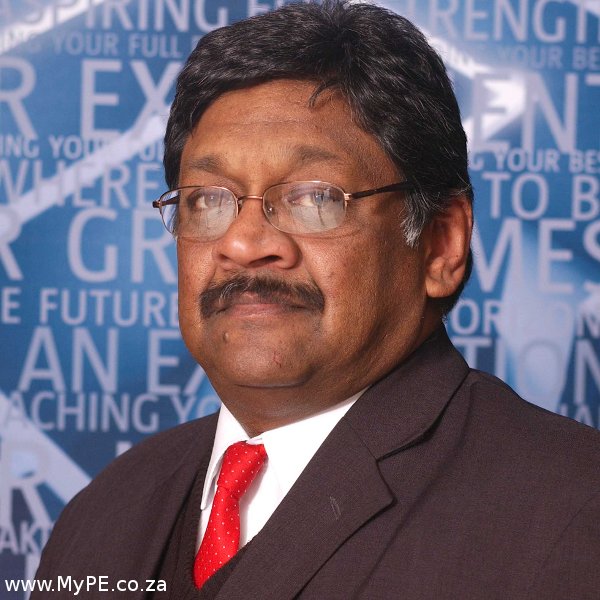
Ronnie Pillay
Chairperson NMMU University Council


Alan Straton
Latest posts by Alan Straton (see all)
- The Diamond Box Helps Couples Plan a Summer Holiday Proposal Online - 16 November 2026
- For Holidaymakers on Dialysis, December Planning Starts Now, Says Mbombela Travel Planner - 16 November 2026
- Blackrock Towing & Recovery Stays on Call for Gauteng’s Festive Season Roads - 16 November 2026
- Alora Medical Wins National Innovation Awards - 16 November 2026
- RM Capital Explains How It Pays Suppliers Directly to Get Orders Moving - 16 November 2026
