
Port Elizabeth: The quiet revolution will not get… louder!
Would you establish a national association based on these numbers: In 2016 Nissan sold seven Leaf EVs, compared with 35 in 2015. BMW’s i3 had a better year, though, with sales of 76 units, compared with 82 in 2015.
Nevertheless the EVIA (Electric Vehicle Industry Association) was established in 2016.
Endorsed by the Department of Trade and Industry (DTI), the association’s founding members are BMW South Africa, Gridcars, Nissan South Africa, Sanedi (South African National Energy Development Institute) and uYilo, a programme of the Technology Innovation Agency. Closer to home, Port Elizabeth based Rubicon Renewables Division is also a member on the back of their supply of electric vehicle charging stations to the trade. Local firm Straton Solar has been involved in installing Rapid Charger stations for the likes of Jaguar in support of their iPace rollout in 2019.
South Africa will be getting the Jaguar I-Pace in EV400 90 kWh AWD specification, with 4 levels of trim. Pricing for Home Charging Stations will be announced closer to the time of launch in early 2019. Home charging cables compatible with normal wall sockets come as standard equipment
Jaguar iPace Pricing: S – R1 687 230; SE – R1 745 540; HSE – R1 829 880 and First Edition – R1 920 700.
The EVIA is comprised of Government departments and agencies, electric vehicle OEMs, electricity infrastructure and suppliers, Electric Vehicle Supply Equipment (EVSE) suppliers and ICT / smart grid service providers, as well as users.
The global acceptance of Electric Vehicles is premised on a number of factors: Trust, Reliablility, Range, Charging Infrastructure, Price and Comfort.
Roland Irle of EV-volumes.com says; “It is safe to predict that global sales of plug-in vehicles will surpass the 2 million mark this year. We are expecting 2,1 million deliveries, a 64 % increase over the 2017 result. This is considering the regional growth trends and the seasonality of sales, with 60-65 % of deliveries occurring in the second half of the year.”
During August 2018 cumulative passenger EV sales worldwide were set to hit 4 million, according to Bloomberg New Energy Finance.
Irle went on to say; “By the end of 2018, the plug-in vehicle population will reach around 5,4 million worldwide, an increase of 64 % over 2017 year end. Still, the impact on the total vehicle stock will be hardly noticeable in most countries. 5,4 million plug-ins on a global light vehicle population of around 1,3 billion, is just 0,4 %, one in 250.”
Premium car maker Volvo is on record saying that its aim is for electric cars to make up 50 percent of its sales by 2025. BMW has confirmed that its future was electric vehicles. Volkwswagen South Africa has said that the tipping point for Electric Vehicles will be 2023 when the first choice for a new car will be electric over internal combustion.
In 2017 Chinese electric car maker NIO, claimed the fastest lap time at the Nurbugring in the EP9 supercar which stopped the clock at 6 minutes 45.9 seconds.
In 2018, Romain Dumas set a new record for the Pikes Peak International Hill Climb, of 7 minutes 57.148 seconds in the all-electric Volkswagen I.D. R Pikes Peak, beating Sébastien Loeb’s previous record by over 15 seconds.
https://youtu.be/CwZbvPY_4aE
Some of the speed figures from Electric Vehicles are staggering:
- Venturi Buckeye Bullet 3: After its 307.6 mph top speed was hit in 2010, the VBB 3 came back to the Bonneville Salt Flats (Utah) in September 2016 to set a new Land Speed Record at 342.144mph.
- Lucid Air: An Alpha prototype of the Lucid Air, has hit top speed of 235 mph (0–60 mph in 2.5 seconds) in early July after speed limiter software was removed.
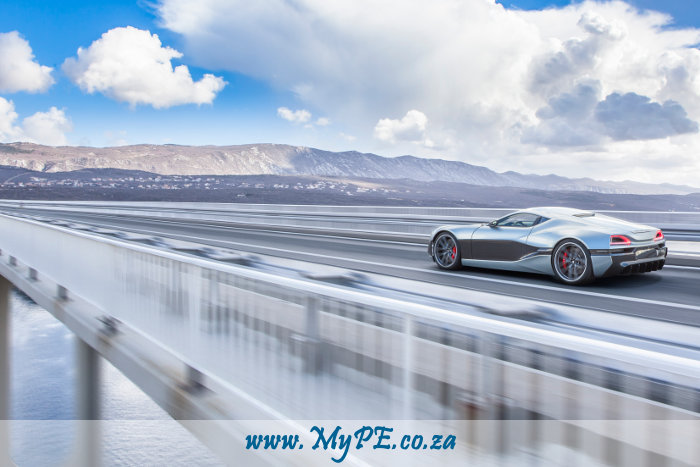
- Rimac Concept One: The Croatian elegant electric car, the Rimac Concept One, boasting 1,224 bhp horsepower and a 221 mph top speed, is one of the most powerful and fastest EVs on sale.
- Vanda Dendrobium: Planned to be marketed as early as 2020, the Dendrobium is already displaying stunning performance: 1,000 bhp, 0 to 60 mph in 2.7 seconds and a 200 mph top speed.
- Tesla Model S P100D Ludicrous Mode: After the Porsche 918 Spyder and the LaFerrari, Tesla’s Model S is the third fastest accelerating production car ever produced. When the Ludicrous Mode is activated, the pure electric car goes from 0 to 60 mph in just 2.4 seconds, with a 155 mph top speed.
- Aston Martin RapidE: Looking like the Rapide S, the RapidE ditches the V12 combustion engine for an all-electric powertrain with a top speed of 155 mph.
- Faraday Future FF 91: The FF 91 has three electric motors that make 1050 hp and is capable of doing 0-100 km/h in 2.39 seconds. The FF 91 also features torque vectoring and four-wheel steering to ensure it can corner hard. Range on a full charge is said to be 480 km.
Range is one of the main factors put up by nervous consumers – in South Africa mormal urban drivers probably cover have long distances of around 800 kilometers once to twice a year. Our driving style with combustion engine vehicles normally demand one longish stop on a long journey – to relieve the bladder, have a quiet chow and maybe 10 minutes kip before continuing.
Battery Range by EV’s is improving by the day.
2018 Top 10 EV’s by Range:
- Tesla Model S – 442.57 to 542.34 kilometres
- Tesla Model 3 – 498.89 kilometres
- Tesla Model X – 383.02 to 474.75 kilometres
- Chevrolet Bolt EV – 383.02 kilometres
- Nissan Leaf – 241.40 kilometres
- Volkswagen e-Golf – 201.16 kilometres
- Hyundai Ioniq Electric – 199.55 kilometres
- Ford Focus Electric – 185.07 kilometres
- BMW i3 – 183.46 kilometres
- Kia Soul Electric – 178.63 kilometres
2018 Prices of the Top 10 above (Rand prices for locally available EV’s):
- Tesla Model S – $74 500 to $135 000
- Tesla Model 3 – $35 000
- Tesla Model X – $132 000 to US$144 000
- Chevrolet Bolt EV – $37 495
- Nissan Leaf – R479 100
- Volkswagen e-Golf – $36 355
- Hyundai Ioniq Electric – $23 300
- Ford Focus Electric – $30 000
- BMW i3 – R637 300
- Kia Soul Electric – $32 800
Before you rush out and order a Tesla consider this: EVs attract the highest import duties, at 25%, while, for example, imported vehicles under one-litre engine capacity from Europe attract no duties.
The disruptor that will catapult electric vehicle sales is the kilowatt hour price of batteries. When the first mass-market EVs were introduced in 2010, their battery packs cost an estimated $1,000 per kilowatt-hour (kWh).
The ‘magical’ figure of $100 per kilowatt hour is the ‘holy grail’ of battery powered vehicles as at that price point price parity with combustion engines will be reached without the use of subsidies.
Stanford’s Arun Majumdar said at the Stanford University’s Global Energy Forum in December 2018; “Within the next five to seven years, the cost of a battery pack will likely reach $100 a kilowatt hour. Why is that important? Because at that cost, electric vehicles will reach cost and range parity with gasoline cars without subsidies. And you give it another 15 to 20 years and we’re likely to see deep penetration of EVs around the world, and with no tailpipe emissions, EVs will reduce air pollution, which is a major problem in many cities around the world. After 100 years of gasoline-based automobiles, this is a tectonic shift.”
At the same conference, Envision CEO Lei Zhang said; “I have something to add on to Arun’s comment, he mentioned by 2022 we are able to reach $100 per kilowatt hour, but I say we are able to arrive much earlier. By 2020 we are able to deliver the cost of $100 U.S. Just recently we bought a Japanese battery company, so we have very detailed analysis of this cost trend, so we are able, probably by 2025, to achieve $50 U.S. dollar per kilowatt hour.”
Many exciting developmenst are going to happen in 2019 and we in Port Elizabeth need to start gearing up to take advantage of this. Think about manufacturing batteries here, utilising second life batteries from EV’s (most still retain 75% of charge after 10 years), installing rapid chargers at supermarkets and restaurants, offering free charging off of solar panels for EV’s at your business, get ready to allow your EV battery to power your home and help stabilise the grid or let’s establish an EV manufacturing plant at Coega (combustion engines are so ‘old school’!).
The world’s FIFTH largest EV manufacturing group, BAIC, has a plant in the Coega Industrial Development Zone. BAIC is a Chinese automobile manufacturer. China leads the world in electric vehicle sales – in the first half of 2018 China bought 419 492 electric vehicles smashing second placed Germany which bought 156 680 EV’s.
Quick Quizz: Which vehicle brand sold the most Electric Vehicles worldwide in the first half of 2018? If you guessed Tesla you would be wrong – how about Nissan?
In South Africa we need to quietly become the Nissan of EV’s and Renewable Energy.


Alan Straton
Latest posts by Alan Straton (see all)
- Desktop Pop-Ups Become the Compliance Channel Email Cannot Deliver - 23 October 2026
- Desktop Pop-Ups Become the Compliance Channel Email Cannot Deliver - 23 October 2026
- Reasons Why You Shouldn’t Use Your Company/Brand Name in a Press Release Title - 23 October 2026
- Reasons Why You Shouldn’t Use Your Company/Brand Name in a Press Release Title - 23 October 2026
- Reasons Why You Shouldn’t Use Your Company/Brand Name in a Press Release Title - 23 October 2026
