
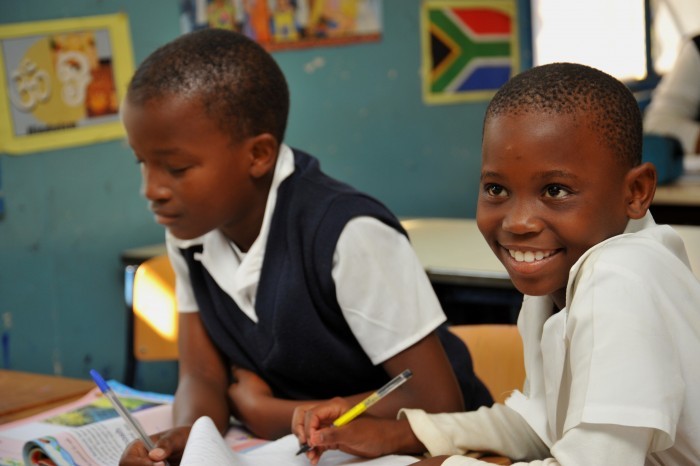
Education infrastructure in the Kwa-Zulu Natal province has improved and thousands of children are being taught in renovated and upgraded schools in the region.
The Coega Development Corporation (CDC) and KZN Department of Education partnered to improve infrastructure at 10 schools in the region.
The Department of Basic Education’s Accelerated Schools Infrastructure Delivery Initiative (ASIDI) programme aims to eradicate the backlog in schools without water, sanitation infrastructure facilities constructed from inappropriate material, including mud schools. The project is in keeping with the national government’s plan to contribute towards optimum levels of learning and teaching through the delivery of quality infrastructure. The CDC acts as an implementing agent for the KwaZulu-Natal education department and the company’s project management experts were responsible for the more than R 20.5-million worth of upgrades to water and sanitation facilities.
The schools, located throughout the KZN province amongst others, are: Abantungwa High School, Dalton Primary, Ebusingatha Primary, Enkelabantwana Primary, Fundulwazi Senior Primary, Indulwana Primary, Khalanyoni Primary, Khulanjalo Primary, Mthuli Senior Secondary and Senzosabasha Secondary.
The work included the installation of rainwater harvesting tanks, building of early childhood development (ECD) centres, upgrading of toilet blocks, the provision of elevated water tanks and connection to municipal water supply.
Zama Mthalane, CDC KZN project manager, said all work was carried out by small, micro and medium enterprises (SMMEs) graded by the Construction Industry Development Board (CIDB) and local communities benefitted additionally through training in various skills such as bricklaying, carpentry and joinery, plumbing and life skills. “Through these projects we are contributing to positive transformation in the education sector,” said Mthalane.
Dr Ayanda Vilakazi, CDC Head of Marketing and Communications, said KwaZulu-Natal has the largest number of scholars at 23% followed by Gauteng with 17.1% and the Eastern Cape Province with 15.5%.
The CDC was appointed 107 schools in the 2012/13 financial year to implement water and sanitation projects at the schools, with some projects rolling over into the 2013/14 FY and 2014/15 with the additional 13 schools to the value of R35-million allocated in the 2015/16 FY to be rolled over to the 2016/17 FY.
In April this year KZN MEC Peggy Nkonyeni said during the KwaZulu-Natal Education Provincial Budget Vote 2015/16 speech the infrastructure programme was funded at a budget of R2.529 billion of which R2.290 million is allocated for capital infrastructure and R239 million is allocated for operating expenditure, a large portion of which is for maintenance. As per the conditions of the grant framework, R25 million has been set aside for the recruitment of personnel in the built environment in order to enhance the implementation and monitoring of the infrastructure programme.
The CDC’s KZN office had built 442 schools on behalf of the KZN provincial department of education during the 2014/15 FY impacting the lives of 38 480 children in the public schooling system.


Alan Straton
Latest posts by Alan Straton (see all)
- TrueTech Readies South African Homes and Offices for a Year-End Tech Upgrade - 2 November 2026
- Now I Understand Why Investing Is Not for the Faint of Heart - 2 November 2026
- LED-Lightbox Rental in Midrand Delivers, Sets up and Collects Light-up Letters, Numbers and Neon-Style Signs for Gauteng Weddings and Year-End Functions - 2 November 2026
- Record Numbers Walk in Step With Those Affected by Cancer - 2 November 2026
- PrintEngine Sets up Web-To-Print Storefronts for South African Print Shops Still Taking Orders by Email and WhatsApp - 2 November 2026
