• Skip to main content
  • Skip to footer
  • Home
  • Directory
  • Add Listing
  • Submit News
  • Contact
  • Gqeberha Socials
MyPE Business

MyPE Business

All About Business in Nelson Mandela Bay

You are here: Home / Archives for Straton Electrical

Straton Electrical

Community-wide Impact from Water Savings

4 December 2023 by Alan Leave a Comment

The Nelson Mandela Bay Municipal Metropolitan area has been subject to drought restrictions for the most part of the last 7 years.

The dams to the west of the metropole have ranged in level from below 10% to almost full over this time.

Tha main water supply to the east of the metropole comes from the Nooitgedacht water treatment plant which receives its water from the Gariep Dam almost 500 kilometres to the north.

As a consequence residents have become accustomed to water savings and punitive tariffs.

Water is a precious resource, and during drought conditions, it becomes crucial to conserve it effectively. Whether you’re in a drought-affected area like Nelson Mandela Bay or simply want to be more mindful of your water usage, we have compiled 11 tips to help you save water.

11 Water Saving Tips:

  1. Fix Leaks Promptly: Regularly check for and repair any leaks in faucets, pipes, and toilets to prevent water wastage.
  2. Install Water-Saving Devices: Consider installing low-flow showerheads, faucet aerators, and water-efficient appliances to minimize water usage.
  3. Shorten Shower Time: Take shorter showers to reduce water consumption. Consider turning off the water while soaping or shampooing.
  4. Collect Rainwater: Utilise rain barrels or tanks to collect rainwater for outdoor use, reducing the need for treated water for gardening and other non-potable purposes.
  5. Water Plants Wisely: Water your garden or plants during the cooler parts of the day to minimize evaporation. Use mulch to retain moisture in the soil.
  6. Sweep, Don’t Hose: Instead of using a hose to clean outdoor areas, opt for sweeping or using a broom to conserve water.
  7. Run Full Loads: When using the dishwasher or washing machine, ensure that you run full loads to maximize water efficiency.
  8. Reuse Water: Consider reusing greywater from activities like dishwashing or bathing for non-potable purposes such as flushing toilets or watering plants.
  9. Adjust Lawn Maintenance: Raise the cutting height of your lawn mower to promote water retention in the soil, reducing the need for frequent watering.
  10. Check Watering Systems: Regularly inspect and maintain irrigation systems to ensure they are functioning efficiently and not contributing to water wastage.
  11. Educate Others: Share water-saving tips with family, friends, and the community to collectively make a difference in water conservation efforts.

Private Prepaid Sub Metering in Nelson Mandela Bay:

In drought-affected areas like Nelson Mandela Bay, private prepaid sub metering offers several benefits for consumers:

  1. Controlled Water Usage: With private prepaid sub metering, consumers have direct control over their water usage. By monitoring and managing their consumption, they can actively contribute to water conservation efforts during the drought.
  2. Cost Management: Prepaid sub metering allows consumers to track their water expenditure in real time, promoting responsible usage and cost management. This transparency empowers individuals to adjust their consumption patterns and save on water expenses.
  3. Community-wide Impact: Private prepaid sub metering fosters a culture of water awareness and conservation within the community. As consumers become more mindful of their usage, the collective impact contributes to alleviating the strain on local water resources during drought conditions.

By implementing these water-saving tips and utilising private prepaid sub metering from local suppliers such as Straton Pre-paid, consumers in Nelson Mandela Bay can play a pivotal role in mitigating the effects of drought while managing their water usage effectively.

The One Small Appliance Most Hated by National Servicemen?

5 September 2023 by Alan Leave a Comment

Straton Electrical Port ElizabethThe Iron! Often a young man’s first introduction to the ‘art’ of ironing was when conscripted into National Service where young soldiers had to ensure that not only their clothes but also their beds, towels and rucksacks were perfectly ironed for inspection. In this days there were no thoughts about energy efficiency as electricity was cheap and paid for by the state. Yes, we even had soldiers using irons as a hot plate for cooking!

Those soldiers will take cold comfort in knowing that the modern day iron has its roots in ancient history. Circa 400 B.C., Greeks would heat a round bar – known as a goffering iron – and use it to produce pleats on robes, much like modern day troepies would iron pleats into the back of their shirts with each line representing a border trip.

An iron consumes as much energy as ten 100 watt light bulbs. Several steps can be taken to increase ironing efficiency:

  • Iron low temperature fabrics first to reduce warm up time.
  • Iron large batches of clothing at one time to avoid wasting energy reheating the iron several times.
  • Switch your iron off before you are finished and complete the ironing on stored energy.
  • Prevent scorching and wasting energy by not over heating the iron.
  • Use only distilled water in steam irons.
  • Be sure to turn your iron off if you are interrupted whilst ironing.
  • Use the permanent press feature on your washer and dryer if it is available.
  • By removing clothing promptly from the dryer and folding them carefully, many items will require no ironing, or just a quick press.

Go further and save more with: Building Automation Systems / Solar PV Installations / Metering Solutions.

What modern consumers would identify as an iron first appeared in Europe in the 1300s. Called a flatiron it was simply a smooth piece of metal affixed to a handle. The iron would be heated over flames until sufficiently hot, at which time it would be picked up with an insulated glove. A layer of cloth would cover the article of clothing to prevent soot from the iron from staining the finished garment. Once the flatiron cooled, it would be reheated and the process repeated. Besides smoothing wrinkles, ironing served another important function, killing germs in clothing and reducing mildew.

Metal technology began developing in the 1800s, hastening the evolution of the smoothing iron. Flatirons could be heated atop cast iron stoves, making the job much easier and cleaner than fire. By 1870, wooden handles were used, preventing users from receiving burns, as wood is an insulator.

Gas irons were patented in the 1870s, making the devices even easier to use. A gas line would carry fuel to the appliance, which contained a burner to provide the heat.

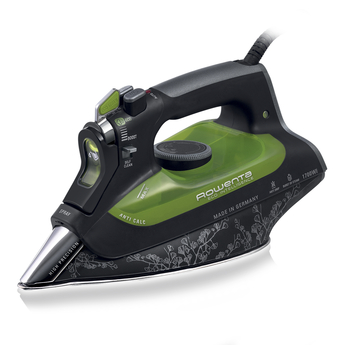
Rowenta Eco Intelligence Steam Iron

The invention of the electric iron coincided with the widespread electrification of American homes in the 1880s. In 1882, Henry W. Seeley of New York City received a patent for the electric flatiron. His model had built-in coils and was heated on a rack. The problem was that it took a long time to heat and cooled rapidly once in use.

Perhaps the biggest breakthrough in smoothing-iron technology occurred early in the 20th century, when irons were made with electric cords. The development helped solve the centuries-old necessity of constantly reheating the iron. Improvements also were made to the sole plate (bottom) of the iron and by the 1920s, many irons came equipped with thermostats to control the level of heat.

In the mid-1920s, the Eldec Company unveiled the steam iron, which facilitated the pressing of dry material. Up to that point, users had to sprinkle water on the fabric. The steam irons funneled water vapor from a receptacle to small holes on the sole plate.

Other improvements in the following decades included the development of an aluminum sole plate that would not rust. In the 1950s, irons capable of both wet and dry operation were introduced, and in 1995, most sole plates had nonstick coating.

Improvements on the sole plate have resulted in more efficient and energy savings. Improved coatings make it less susceptible to scratches from zippers or buttons on garments.

In 2012 Rowenta announced the Eco Intelligence Iron with a new patented Microsteam400 3De soleplate (Patent US no. 7,305,780). Apparently the soleplate is the crux of the energy-efficient design – helping to concentrate steam on the fabric, reducing loss of steam and therefore saving on water usage. The iron is claimed to reduce energy usage by 25%. At a price of around $170.00 (shipping and taxes included) one would have to iron a lot of clothes to justify the price, though.

Straton Electrical Port Elizabeth
Straton Electrical, Gqeberha

CLICK HERE to submit your NMB Business News..

More Info on The One Small Appliance Most Hated by National Servicemen? here: Straton Electrical
Address: 13 Mangold Street, Newton Park, Gqeberha
Author: Alan Straton from Straton Electrical.
Images: For high res version/s of None image/s please contact Straton Electrical.


Loadshedding Survival Tips

31 August 2023 by Alan 1 Comment

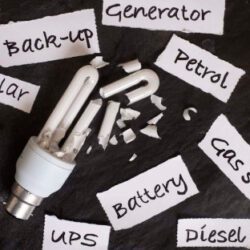
Loadshedding has become South Africa’s Number One ‘Sport’ as various Ministers and a parade of CEO’s peddle the latest quick fix solution.

Many of us cannot afford a decent Solar System to keep the lights on and have developed our own coping mechanisms to make loadshedding just that tiny bit more palatable.

Here are 15 tips from Straton Electrical to help you survive load shedding risks, without the need of a generator or solar panels:

Tips to Survive Loadshedding. Straton Electrical
  1. Know your schedule: Make sure that you keep track of any scheduled outages in your area by downloading a reputable Eskom load shedding app on your smartphone. Alternatively, ask to be added to a group of friends who can keep one another updated on planned load shedding schedules.
  2. Be security savvy: The sad reality is that criminals also study load shedding schedules to identify which areas will be vulnerable at specific times. Tripped and false alarms are great opportunities for opportunistic burglars. Be extra vigilant about access to your home and securing your perimeter.
  3. Get back-up batteries for your alarm and gate system: Ensure that your alarm system is in a working condition and the back-up battery is fully functional to provide power to the system in the event of load shedding. Similarly, check that your garage door motor or electronic gate can function without power.
  4. Make sure you have sufficient back-up lighting: Keep a torch or headlamp in your car if you arrive home at night during a power outage. Most smartphones have built-in torches or torch apps which come in handy during unexpected power outages – which bring us to the next point…
  5. Always stay charged: Ensure your cellphone, laptop and tablet devices are fully charged ahead of scheduled blackouts. Be sure to charge them again as soon as possible after the power returns. It’s also a good idea to have an emergency phone charger and power bank close by. This comes in handy during extended power outages.
  6. Plan to stay connected: Staying connected to the internet is a great way to keep in touch with what’s happening as well as for regular updates, so ensure that your mobile data stays topped up. Remember to use devices sparingly during outages so that you don’t drain the battery completely before the power returns.
  7. Don’t forget the benefits of gas: Invest in a small gas bottle and lamp to for cooking and lighting. A gas lamp provides good quality lighting for a large area and a gas cooker can be a life saver during electricity cuts. It’s a good idea to keep hot water in a thermal flask so that you can make hot drinks. Prepare meals beforehand if you know there’s going to be a scheduled blackout during meal times.
  8. Stock up on bottled water and pop some in the freezer: Some households depend on electric pumps for their water supply, especially in rural areas. Frozen bottled water will help keep food cold during a power outage and will also not spoil. Having a few extra bottles handy will ensure you won’t run out during outages.
  9. Keep the cold in: Leave your freezer and refrigerator doors closed as much as possible to preserve the temperatures inside. Did you know that a fully stocked freezer should keep food safe for up to two days and a refrigerator for four to six hours?
  10. Unplug your cables as soon as the power goes out: Consider any electrical connection as live during a power outage as power can return at any time. Unplug any electronic devices or equipment or switch it off at the wall, including fixed telephone cables. This will help prevent damage or injury due to surges that may occur when electricity is restored.
  11. Back up your data: If you save important data on our home computer, consider backing it up over the internet in case of a hard drive crash or unforeseen electrical fault. Online cloud-based backups are very convenient and are mostly automated, which means that you have one less thing to worry about.
  12. Know your emergency contacts: Save emergency contact information on your phone but also keep a printed copy close by. This should include emergency services such as the fire department, police and medical services. Also include contact information of friends and family along with your insurance information.
  13. Buy perishables in smaller amounts: With longer and more frequent blackouts, perishables like vegetables are more likely to spoil. So, shop sparingly. While your fridge/freezer can preserve food for a few hours without power, the higher stages may not give the system enough time to reach optimal temperatures. While we often advise buying in bulk to save, in this case, less is definitely more.
  14. Plan tasks around the schedule: Cook when you can so you don’t spend money on takeaways or going out. Time your laundry so you don’t end up with a half-washed load that needs to be rewashed when the power comes back. All these little expenses add up.
  15. Gather the family together: Instead of having each family member squirrelled away in their own room, gather everyone together. You’ll be using fewer lights and spending more quality time together.
Are we missing any tips you would like to add?


Electric surges are one of the biggest causes of damage to your household equipment during a power outage. Installing a surge protection device can help minimise some damage in unforeseen situations. Have a surge protection device fitted to your electrical distribution board or at the power outlets to electronic devices. Contact a profession electrical contractor to discuss the process and costs involved.

Video: Loadshedding Survival Tips:

CLICK HERE to submit your NMB Business News..

More Info on Loadshedding Survival Tips here: Straton Electrical
Twitter: https://twitter.com/MyPE
Facebook: https://facebook.com/MyPEco
Address: 13 Mangold Street, Newton Park, Gqeberha
Author: Alan Straton from Straton Electrical.
Images: For high res version/s of One image/s please contact Straton Electrical.


Footer

NMB Business News

  • NMBBC On Budget 2025
  • Leading Business Minds Set to Headline Chambers Annual General Meeting
  • Bay of Opportunity Portal
  • Bay of Opportunity Ambassadors Programme to Promote the Bay and Attract Investment
  • 6 Decades of Trucking
  • Thermal Camera Installed at Redhouse Substation
  • Finalist in the 2025 South African Car of the Year
  • Joining hands to create a lasting impact to St Albans Primary School
  • What does the Business Chamber hope to see in the Budget?
  • Robust Skilled Talent Required to Meet Industry’s Future Needs
  • Launch of Chamber’s Skills Development Desk Set to Address Local Skills Gaps and Boost Employment
  • Adopt-A-Substation Initiative Demonstrates Power of Collaboration
  • New Improved Crafter
  • Boost for Ducati South Africa
  • The all-new Volkswagen Tayron

Submit a Listing

Submit New Listing

Popular Listings

EXP South Africa

EXP South Africa

4 (1 review)
Moffett on Main

Moffett on Main

0 (0 reviews)
A V Officeware CC

A V Officeware CC

0 (0 reviews)

RSS feed: MyPR MyPR

  • The Adviser of the Future: Where AI Meets Human Expertise
  • South African Author Steve Hegerström Brings Humour to the Unexpected
  • Samro brings senior Leadership team to Cape Town for #MEX26
  • Serious Social Investing Conference 2026 Focuses on Doing More With Less
  • My SME Supports Entrepreneurs Through Enterprise and Supplier Development Programmes

How you may use MyPE content © 2026 MyPE · Gqeberha, South Africa | Privacy Policy | MyPE Ads and Media Kit